


The Christmas tree is gone. The silence in the living room felt even heavier. An empty moment at the end of January 2026, when it seemed like the gray skies would last forever and the heating costs kept rising. Many people say that winter is not a good time to grow plants. They say that a heated apartment is a graveyard for chlorophyll. They suggest waiting for spring.
This advice is wrong. Visual relief is taken away when you need it most.
Now is the time to take action. You don’t need a botanist’s touch to create oxygen bubbles. You just need the right variety. The goal is not a sophisticated tropical greenhouse. It’s about volume, graphic strength and flexibility. Learn how to create an urban jungle in your home this winter using 12 proven plants.
Why your living room is an ideal plant sanctuary
Forget windshield frost. Indoor environments provide the stability that exotic plants seek. In January 2026, keeping the thermostat at 19 or 20 degrees creates a uniform environment for energy efficiency. This stable temperature is a huge advantage. Protects plants from impacts when moving from a warm workplace to a cold car.
Lighting is also a problem. Beginners think that the weak light in January will kill the plants. This is not true. Most tropical shrubs do not like direct sunlight. Direct sunlight can cause the leaves to burn. A French living room with filtered, diffused light is perfect for them. Keep it away from radiators. Dry heat is the biggest enemy of leaf health.
“Introducing plants can clear the trapped air of winter and create a breathable refuge from the darkness.”
The Green Giants: Structuring Your Space Instantly
For immediate results, you need anchor plants. These are the basis of the interior design. They take up space like furniture or sculptures. This year, XXL leaves reappear in nurseries that effectively fill rooms.
The important parts of the volume of the structure are:
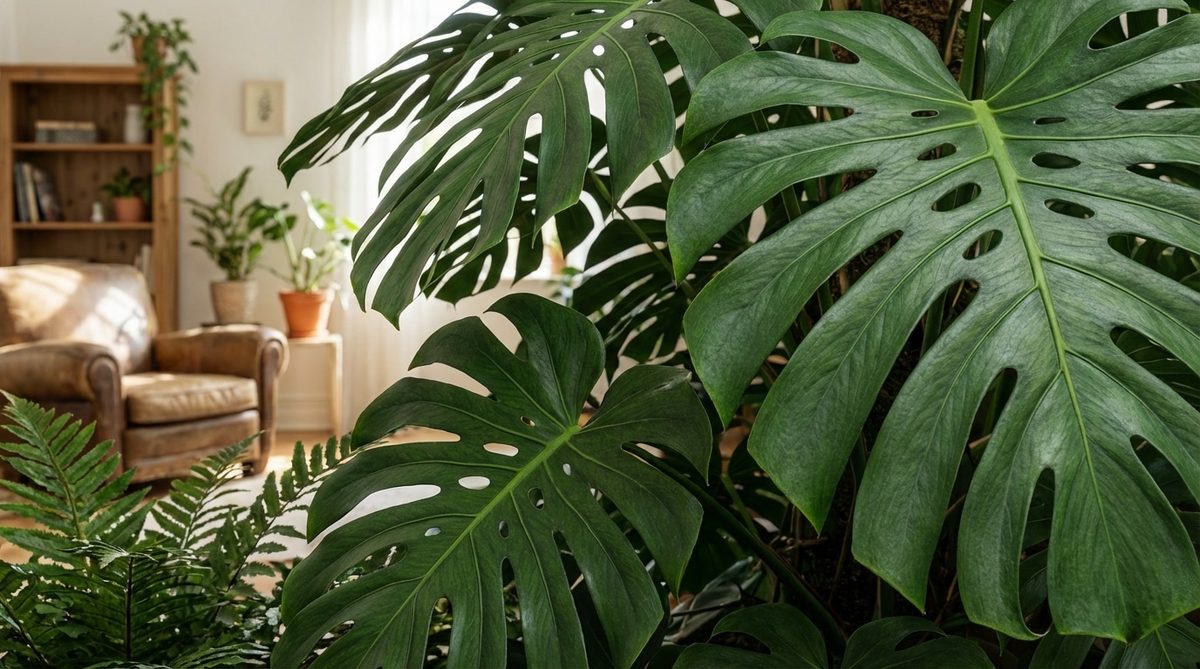
- Monstera : An absolute star. Its distinctive foliage creates an instant jungle beauty. Look for mature specimens in 2026. There should already be a window, which is a natural hole in the leaf. Young leaves look flat. The old leaves are impressive.
- Strelitzia nicolai (White Bird of Paradise) : Supergraphic. The giant leaves resemble banana plants. Add some serious verticality. Place it in an empty corner and draw your gaze upwards.
- Ficus lyrata (Lyre Fig) : Large violin-shaped leaves. It’s stylish and bold. One hardy plant often covers an entire wall.
- Ficus elastica (rubber plant) : Once considered obsolete, it makes a comeback. The leaves are thick, dark green and shiny. It is stylish and durable.
Add palm trees to increase density. Kentia (Howea forsteriana) looks like a neat hotel lobby. Areca Palm trees are dense. Its foliage makes it perfect for covering landscapes and softening the hard lines of architecture.
Color and Pattern: The Calathea and Beyond
Once the structure is created, an eye for detail is needed. This is where patterned leaves come into play. Forget the flowers. Indoor flowers are difficult to take care of in winter. Pay attention to leaf art.
Calathea is the main character of 2026. The leaves have wonderful designs that look like they are hand painted. The back side is usually purple. It demands more humidity because it hates dry air. But the visuals are second to none.
Combine with Alocasia. Varieties such as Polly and Zebrina have arrow-shaped or shield-shaped leaves. Zebrina has striped stems. Combining these enhances the tropical feel without looking cluttered.
Indestructible: A plant that forgives your neglect.
Urban gardening should be fun, not planned. We need hardy plants. It can survive if you forget to water it or go on an unexpected vacation. They make sure your jungle survives. They fill gaps with confidence.
These are the champions of resistance:
- Zamioculcas (ZZ Plant) : an indestructible modern alternative. It even grows in the shade. It handles water neglect. Its green color is bright. This is the safest investment for beginners.
- Pothos (Epipremnum aureum) : A plant that spreads easily. Place it on a shelf or hang it up. Grows very fast. You can root cuttings by placing them in a glass of water. Visually ties the elements of the jungle together.
- Monstera adansonii : Known as Swiss cheese vine. It is a climbing or trailing version of Monstera deliciosa. There are obvious holes in the leaves. Add a wild and detailed texture.
- Philodendron : Scandens or Erubescens types. Produces abundant growth with little effort. They fill space quickly.
Start with the giants for structure. Add patterned leaves to make a statement. Finish with a forgiving variety for longevity. The result is a living filter for winter air. A visual break from the gray. The work is in the selection. The rewards are immediate.
Achieving a full, layered look requires more than just buying plants. It’s all about placement. Interior landscape designers use special formulas to create depth without clutter. The strategy is simple. Two large plants, one palm, two architectural plants and two trailing varieties. This layer mimics the canopy of a natural forest. You get complexity. Save floor space.
Winter changes the rules of engagement. Limitation is the key. The biggest mistake a homeowner makes is overwatering. In January, most tropical plants go into partial dormancy. Their growth rate is slower. Water absorption is reduced. Allow the top 1 inch of soil to dry completely before watering again. Finger testing is non-negotiable. Stick your finger in the pot. If it’s wet, wait. Water if dry.
Dry indoor air is your real enemy. Calatheas and Alocasia grow in moist areas. Stress is quickly visible in the brown, crispy edges of the leaves. It helps to group them. Their transpiration effects together form a microclimate. These little pockets of moisture keep the leaves plump and green. This reduces the need to place a humidifier in every corner of the room.
Letting in light is more important now than in the summer. Dust acts as a barrier. It inhibits photosynthesis. It also hides pests. The leaves should be wiped with a damp, non-limestone cloth. Restores the plant’s ability to breathe. It reflects light back into the room. This task takes a few minutes. The effect is an immediate visual improvement. You can also check for scale and spider mites as you work.
There are no risks associated with starting the indoor jungle in December. This is a protection against seasonal depression. Green creates structure. It brings liveliness to the gray season. The plant is dormant and does not die. they are waiting. The growth continues as the days get longer. Monstera grows bigger. Pothos grows as a vine. You create the foundation.
Optimize light and humidity to survive the winter
The goal is to make the most of the little winter sunshine. Positioning matters. Place delicate tropical plants near south or east facing windows. Avoid cold drafts from doors and windows. A drop in temperature can shock the roots. Check your thermometer. If the temperature drops below 15°C, move the plant out of the glass.
You don’t need expensive equipment to control humidity. A tray filled with stone and water works well. Place the pot on top of it. As the water evaporates, the local humidity increases. Be careful not to put the pot directly into the water. This prevents the roots from rotting. Grouping plants is still the most effective way. Create a cluster. The collective moisture output sustains the group.
Dust cleaning is part of the daily routine. Use a damp, soft cloth. Be gentle. Large leaves such as Monstera deliciosa and Bird of Paradise should be cleaned regularly. Small leaves, such as fittonia, require misting or gentle rubbing. Clean leaves are healthy leaves. Reflects light better. It also makes it easier to spot problems early.
Choose a variety suitable for twilight
Not all tropical plants can overwinter equally indoors. Sometimes you just need a highlight. Some people can tolerate lower levels. The “Urban jungle” model is based on hardy varieties. Monstera deliciosa is a staple. It tolerates neglect. Adapts to different light levels. Cal


