Spring has come and things are different. It’s not just that the weather is getting warmer. It gets your hands dirty. You want to grow food. I want to feel the sun on my face and smell the basil. However, the same treatment of all plants reduces the yield.
Especially tomatoes, a summer staple.
Everyone is hoping for a good harvest. But a simple mistake when planting seeds in late April can kill a plant’s potential before it actually starts growing. If you just dig a hole the size of a pot and put it in there, you’re doing it wrong. There is a special technique that turns delicate seedlings into tanks. First, how to plant plants in soil.
The fatal mistake limits the growth of tomatoes at the end of April
It’s easy to feel anxious. The soil is soft, the sun is shining brightly and the greenhouse is full of seedlings. Remove the plant from the plastic nursery. Instinctively, they try to dig a hole that fits snugly into the root ball. You put it in, you fill the gap. It also looks clean. Looks right.
This is a trap.
This standard method can be applied to many garden plants.
It doesn’t work on tomatoes.
Even if you plant it at the same height as the pot, the roots will be shallow.
They are super heavy. If a strong spring wind blows, it may topple over.
In addition, their ability to obtain nutrients deep within the earth is limited. You build your foundation on sand.
Why you can’t use soil in a flower pot as a guide
Look at the stem. Really look. You may see a faint white fuzz near the bottom where the green color meets the ground. Almost invisible. Most people ignore it.
That little fur isn’t just a decoration. They are adventitious roots waiting to happen.
The tomato has a biological cheat code. If you bury the stem, the hair will grow. They develop a dense and powerful root system. By keeping the stem above ground level, this secondary root network can be ignored. This makes the plant dependent on a single shallow root ball. This limits water absorption. Limits the absorption of nutrients. The harvest is over before summer begins.
Fill the tomatoes up to the first leaf
This was the move that changed everything. Tomatoes must be planted deep.
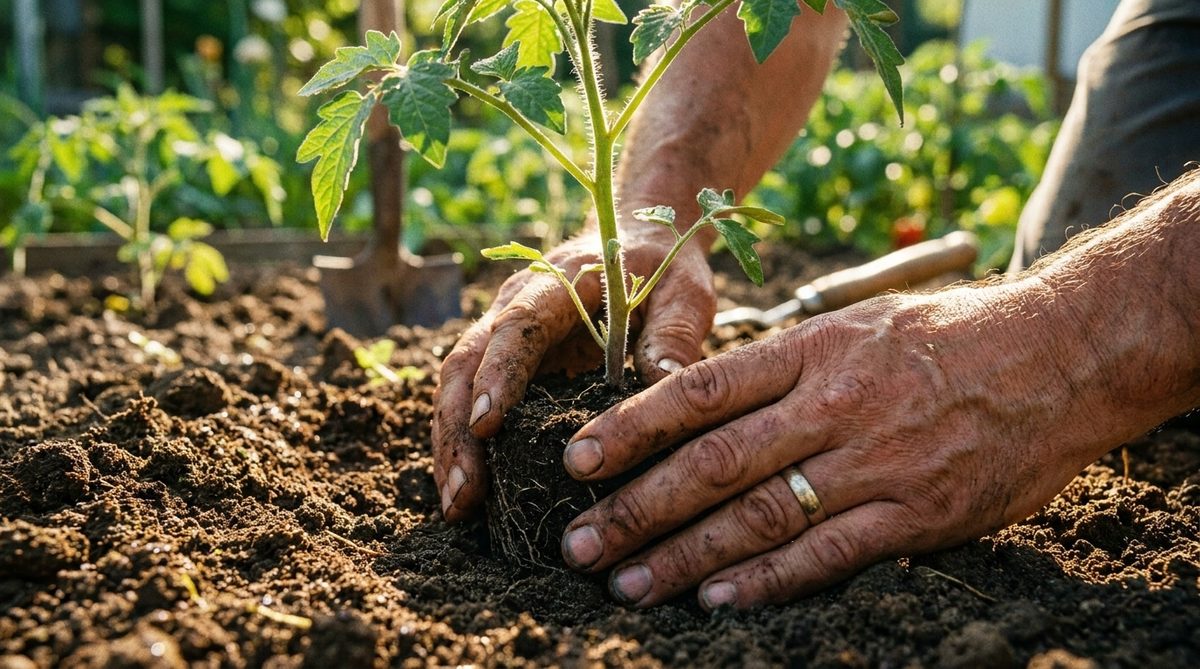
Remove the lower leaves. We are not talking about weeding out some. We are talking about exposing most of the stem. When you dig a hole, dig deep. The stems should be buried 10 to 15 centimeters (about 4 to 6 inches). Always continue to where the first healthy leaf is.
Yes, it looks like the tomatoes I planted were either upside down or broken. This is not true. This is strategic.
By burying the stem, you actually give the plant another root system to begin with.
This buried part is not only there. I woke up. Within a few days you will see a huge network of roots forming along the buried stem. This doubles (or triples) the surface area of the plant’s roots. More roots means more water. More roots mean more nutrients. Plants become anchors. It becomes dynamic.
How deep planting can combat summer drought
You might think this is dangerous. What happens when plants can no longer breathe?
In fact, it’s quite the opposite. Deep planting protects against drought.
The summer heat is intense. The top few centimeters of soil will burn to pieces. Shallow-rooted plants panic. They withered. stopped production. However, tomatoes planted deep take root in cooler, wetter soil. Even if the surface is dry, the plant still has access to moisture. It remains swollen. It continues to bloom. It still bears fruit.
This is not just a matter of survival. It is consistent production. When other plants struggle in July, deep planted tomatoes thrive.
Exception: Planting time at Ground Level
Deep planting is not possible in all situations. You have to read the land.
If it’s still cold. If the rain hasn’t stopped yet. If the soil is heavy clay soil and remains wet for several days, it is better to take a break.
If the stems are immersed in cold and damp soil, it can cause rotting. The stems cannot withstand moisture or lack of oxygen. They rot. The plant dies. This is called stem rot, and it happens quickly.
How to deal with heavy and cold spring soil
If your garden is wet in April, don’t use the deep planting method.
Instead, plant it in the collar. This means that the top of the root ball should be completely flush with the surrounding soil. Just like in a pot. This keeps the stem above the water line. Allows air to circulate around the base. Keep the plants dry until the weather warms up and the soil drains well.
Wait a few weeks. When the soil is dry and the sun has warmed the soil, you can go back and pile more soil around the base if you forgot to plant deeper the first time. However, if you are starting over in a humid environment, keep it dry.
Look to the sky. Check the soil quality. Don’t just blindly follow the rules. A good gardener knows when to change the rules to suit the soil.
Planting depth depends on soil temperature, not just habit
Don’t look at your calendar. Touch the dirt. If it feels loose, warm and inviting, go a little deeper. Bury the stems about 10-15 centimeters deep in the ground. The more roots, the stronger the anchor. Here are some simple tricks to boosting vigor in spring.
But the soil can lie. Do not use force if it is heavy, cold or waterlogged. Place the root ball level with the surface. Shallow planting prevents plants from rotting in clay soil or cold soil. Your fingers know things that no book can teach you.
Immediate care prepares you for harvest
Watering is not optional. It’s structural. Immediately after planting, soak the seedlings thoroughly in room temperature water. This will remove air pockets. It forces the roots to kiss the ground forever. Keep dry areas dry. Wet pockets drown. Balance is the key.
Stake early. If you wait too long, you run the risk of the new, fragile roots piercing those new, fragile roots with a metal rod or wooden posts. Drive the stakes in before the plants get established. It’s cleaner. It’s safer. It is less stressful for seedlings that have just moved across a room.
Adapt to soil conditions to increase yield
Most gardeners plant the same way every year. It’s habit. But the ground is changing. The weather changes. What worked last June may ruin the crop this July. Observing the real-time state of your garden bed can be the difference between struggle and surplus.
If the soil drains quickly, plant the plant deeper to allow moisture to reach it. If drainage is poor, plant shallower to prevent suffocation. This sounds intuitive until you get too complicated with graphs and spreadsheets. The ground tells you what it needs. listen.
Why seedlings need patience, not force
I want results. We all do. However, roots need time to knit together. Rushing the process with hard fertilizers too quickly or deep plowing can shock the system. Let’s stick to the basics. Water. Support. Observe.
In some years, the soil is more forgiving. Others it fights back. Your task is to read the signals. Is the plant drooping in the midday sun? It may need shade, not just water. Is the soil crusty? It needs aeration, not more liquid.
Building a sustainable garden ecosystem
This isn’t about perfection. It’s about resilience. Adjusting planting depth based on actual soil temperature and texture can provide a buffer against unexpected weather conditions. Deep plants survive better in dry periods. A shallow plant survives in moist springs.
The goal is to a harvest that doesn’t depend on luck. It depends on your attention. Small tweaks. Respond immediately. The difference between a garden that survives and one that thrives is often determined by how closely you monitor your soil.
So what is your soil telling you today?