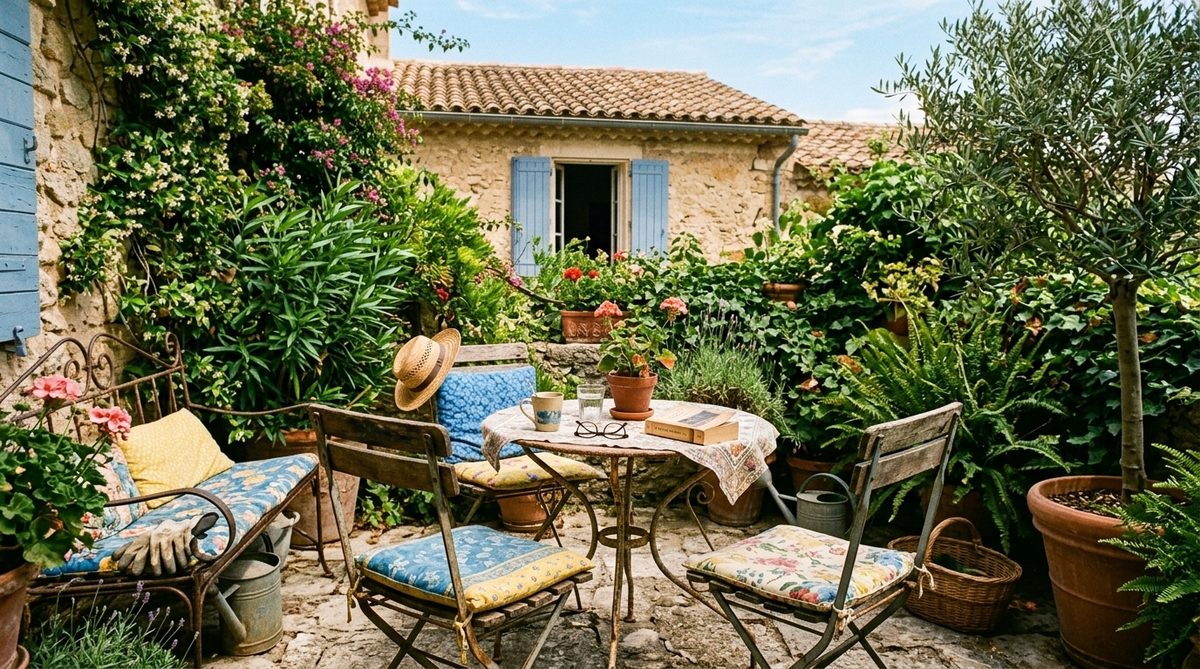
Summer is here. The sun is out. You want to relax outside. It’s easy to head to a local nursery like Botanic or Jardiland, grab some pretty potted plants, and line your terrace. You want soft greenery to blur the hard lines of your masonry. It looks perfect.
But underneath that aesthetic charm, some perennials have a violent temper.
You might lift an unstable tile years later and find the damage is terrible. Roots don’t just grow. They push. They pry. They break concrete. Understanding which plants to avoid is the only way to save your hardscape while keeping your garden green.
The invisible mechanical force of aggressive roots
It starts innocently. You water the plants. You add compost. No chemicals needed. The leaves thrive in the summer heat.
Then, the underground part wakes up.
The root system infiltrates the moisture in the soil. It seeks out the smallest crack in the sand bed or the foundation. It builds a massive network beneath your feet. And it applies pressure. Season after season.
This isn’t a metaphor. It’s mechanical force. Thick roots expand as they grow. If they hit a rigid surface, they don’t stop. They lift it. They fracture it. They turn your serene patio into a tripping hazard.
Four culprits that destroy outdoor structures
Don’t plant these four classics right next to your foundation or outside paving slabs. They are known for invasive behavior when installed without barriers.
- Running Bamboo: This isn’t the clumping kind. The running variety shoots out long, sharp rhizomes. They pierce through standard protective geotextiles. They slide under tiles. They lift thick slabs with alarming ease.
- Japanese Knotweed: Extremely vigorous. It has invasive underground stems that can fracture reinforced concrete. It does this to find light and expand its territory. It is ruthless.
- Wisteria: The flowers are beautiful. The roots are a problem. They are thick and develop colossal strength. They can crush low retaining walls or shatter paving stone.
- English Ivy: If you let it creep on the ground as a ground cover, it wins. It anchors itself into expansion joints. It swells as it thickens, blowing apart the mortar around it.
How to fix it without harsh chemicals
If you have an infestation, you need to act. But do not reach for weed killer. Pollutants are not the solution.
You need manual extraction. Dig deep. Pull out every fragment of root and rhizome. If you leave a tiny piece behind, it will sprout again next year. It is stubborn like that.
Once the area is clean, you need a barrier.
Install a rhizome barrier. This is a rigid sheet made of high-density polyethylene (HDPE). You can buy it at big-box hardware stores like Leroy Merlin.
Here is how it works:
1. Dig a trench alongside your planting area.
2. Insert the barrier vertically.
3. Ensure it goes at least 70 centimeters (28 inches) deep.
This wall forces the recalcitrant roots to grow downward. It keeps them away from your shallow installations. It stops them from undermining your structure.
Planning for the long term
You can keep your outdoor space healthy. You just need to anticipate.
Check the growth habits of every plant before you buy it at the nursery. Is it running? Is it climbing? Does it have thick, woody roots? If it has any of those traits, keep it away from your hardscape unless you install a proper root barrier first.
There are plenty of safe, colorful alternatives for your patio borders. The key is knowing which ones won’t eat your house.
What plants are you thinking of adding to your garden this season? Are you playing it safe?