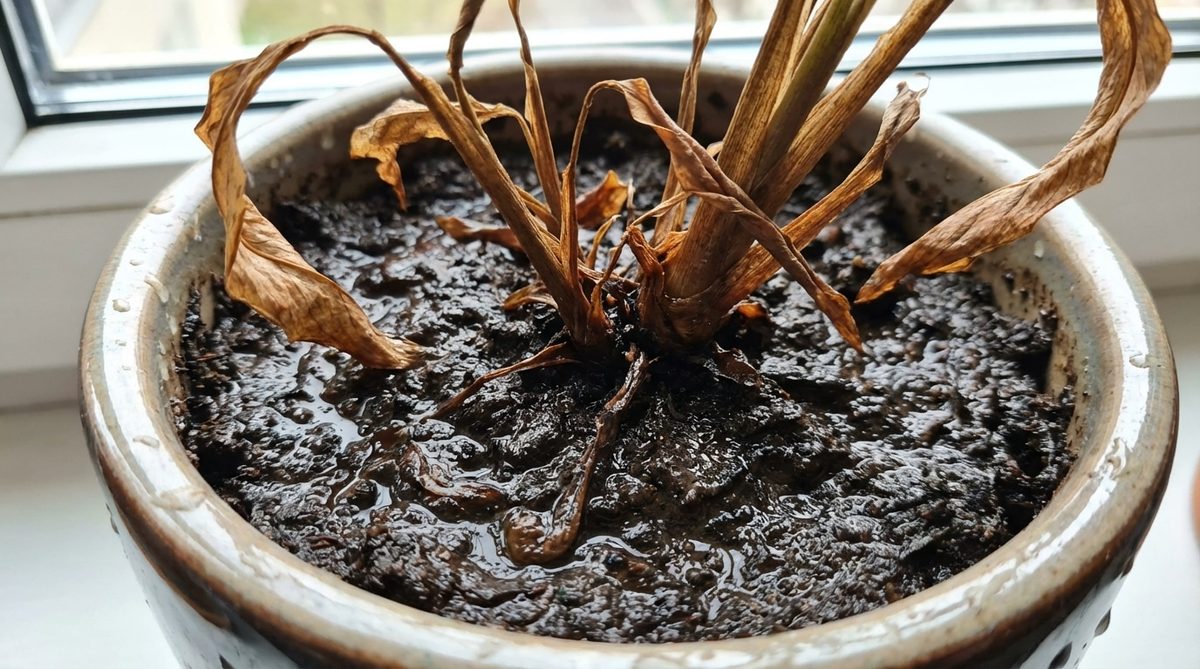
It’s mid-January. The light is thin, the air is crisp, and your favorite potted plant on the windowsill seems to be giving up. The leaves hang loosely. They feel soft. It cries out, “Water me.”
A natural instinct ingrained by months of summer gardening is to reach for the watering can. You water. A few days pass. The leaves turn yellow. Mold sets in. The plant dies.
You thought you’d save it. You really killed it.
This is an invisible trap that will destroy balconies and indoor gardens every winter as we head into 2026. What looks like drying out is quite the opposite. Only by understanding this paradox can you keep your plants alive.
Why does your plant wither in a wet pot
The most common mistake that both beginners and veterans make is relying solely on their eyes. A plant that withers in winter is not always thirsty. Often this laxity is a cry for help from a suffering root system.
You can break this optical illusion by using the most reliable tool: your hand.
Raise the pot. If it feels heavy, dense and difficult to move, the soil is still saturated. Evaporation is low in cold weather. The plants’ needs are on hold. Continuing to water the heavy pot will only saturate the medium further. A hostile environment is created where the plant cannot physically drink.
Physiology of drowning
Here’s a secret that most gardeners miss: A plant can die of thirst if its feet are in water.
Scientists call this “physiological dryness.” Roots don’t just need water. They need oxygen. In healthy soil, air pockets circulate between the soil particles. This allows the roots to breathe.
If you water too much in winter or the drainage is poor, the water displaces the air. The substrate becomes an anaerobic zone. A wet surface prevents the exchange of oxygen. The roots are suffocating. They rot. When they rot, they stop pumping water into the leaves.
The leaves wither from the inside out. The plant dries up because there is too much water outside. It’s a cruel paradox.
How to read emergency signals before it’s too late
You need to learn to read the signs before the damage is irreversible. The thirst of summer makes the leaves dry and brittle, like paper. Overwatering in winter looks different.
Watch out for these warning signs:
- Soft, yellowing leaves: If the leaves feel rubbery or turn yellow and the tips are brown, the plant is suffocating.
- Musty odor: Sniff the soil. The smell of damp forest floor or rotting fungus indicates fermentation.
- Fungus gnats: Small flying insects hovering over the dirt indicate that the ground is too wet and decaying.
- Darkening of stem base: This is critical. This means that crown rot has already started.
If you notice any of these symptoms, stop watering immediately. Allow the soil to dry. Do not touch the watering can.
Draining wet soil and protecting roots
Waiting is not always enough. If the plant is in distress, you have to act mechanically. You need to bring air back to the root area.
The solution is free. It does not require chemicals. This is manual ventilation.
Take a wooden stick, a thin metal rod or even an old knitting needle. Gently push it into the soil to create vertical channels. Go down to the bottom of the pot, but be careful not to slice the main roots. These channels act as chimneys. Air gets in. Moisture is removed faster.
Combine this with these emergency measures:
- Elevate the pot: Never leave the pot on a saucer full of water. Use feet or blocks to ensure air flow under the drainage hole.
- Remove Mulch: If there is bark or gravel on top, remove it temporarily. Let the soil breathe.
- Use absorbent paper: For potted plants, you can remove the root ball and place it on newspaper or absorbent paper for a few hours. The paper absorbs excess moisture through capillary action.
It’s not about having a green thumb. It’s about the discipline to do nothing when everything inside of you is pushing you to do something. The soil may feel dry from above. Leaves may droop. But if the pot is heavy, leave it alone.
Let it breathe.
January-February water supply creates the conditions for spring growth
January and February are not just dead months. They are the basis for the spring awakening of your garden. How you handle the water now will determine whether your plants will bounce back or wilt. You must check them weekly. But don’t act impulsively. Wait until the sun shines again before rushing in with the watering can.
When it comes to outdoor potted plants, drainage is a priority. Check the holes in the bottom of each pot. Ice can block them. Compacted soil can close them. If a hard frost is expected, leave the potting soil a little drier than usual. Wet ground freezes into solid ice. It expands. It breaks the roots. Dry ground provides protection.
In the house or in the winter garden, the rule applies: restraint. Water sparingly. Wait until the soil is dry several inches deep. Use the finger test. Press your fingers into the ground. If the other knuckle feels wet, stop. Don’t water yet. If you use water, use small amounts.
Patience is the winter gardener’s most important virtue. A thirsty plant is much easier to revive than a drowned one.
Overwatering is the most common reason houseplants fail in the cold months. The roots need oxygen as much as moisture. Damp ground suffocates them. Rot follows quickly. Knowing that water can suffocate just as easily as it nourishes will save you heartache come March.
Before tipping the carafe over the ficus or laurel tree, ask yourself: does it really need water or is it just trying to breathe?
Monitor your plants during winter dormancy
Winter gardening is less action and more observation. It is a time of restraint. You look. You wait. You learn. This time of inactivity is not wasted time. It’s preparation.
Keep an eye on your garden beds. Even though the plants are dormant, they are still alive. You save energy. They wait for warmth. It’s your job to make sure they survive the cold without being over-handled. Too much disturbance can disrupt their natural cycle.
Houseplants face different challenges. Dry air in heating systems can strain them. Mist them from time to time when the air is particularly dry. But don’t let the leaves soak. Focus on soil moisture. Keep it on the drier side.
Let’s get ready for the first rays of the sun in March
As March approaches, you will notice changes. The days are getting longer. The earth is melting. Now is the time to adjust your routine. Gradually increase the frequency of watering. Watch for new growth. The patience you use in January-February will pay off. Your plants will respond to the increased light and heat with renewed vigor.
Don’t rush into full bloom mode. Spring can be irregular. Late frosts may still occur. Protect sensitive shoots if necessary. But let the plants lead the way. Watch for signs that they are ready to wake up. Then, and only then, resume your regular gardening schedule.
This approach ensures that your garden doesn’t just survive the winter. It thrives in the spring. The most important thing is to let nature take its own course while offering as little support as possible to protect the plants.