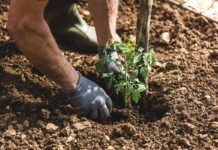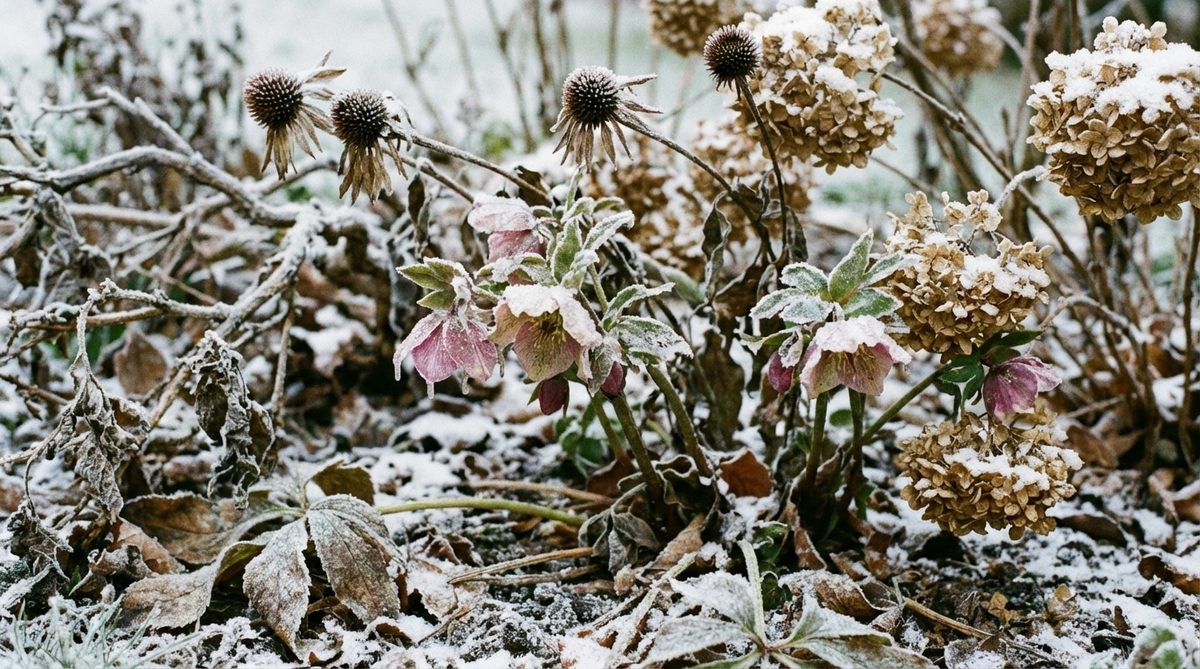
It is January 2026. The thermometer can drop ten degrees in an hour. You stand in your garden and watch the precious plants shake. Instinct kicks in right away. Clean up. Pack it up. Throw it away.
Why do we do this? We want the “perfect” garden. A clean slate. But this obsession with order may be the very reason your plants die.
The solution cannot be found on the hardware store shelf. It’s underfoot. It’s the brown stuff you drag to the dump.
A hidden resource we are wasting
Garden magazines have been selling us lies for decades. They said a perfect garden has no trash. No leaves. No branches. Just green grass and bare earth.
That’s wrong.
Nothing goes to waste in nature. Trees drop leaves. The ground catches them. The cycle continues. When you rake the leaves into the bag, you break this cycle. You are removing biomass that the soil has produced over the months through photosynthesis. You are exporting your garden’s most valuable asset.
Stop thinking of leaf litter as trash. Start thinking of it as gold.
Bare ground is a winter disaster
Imagine going outside in -5°C without a jacket. You would freeze. Your roots will feel the same.
When you clean the soil of roses, hydrangeas or vegetables, you expose the dirt to the elements. This is dangerous for three reasons.
- Nutrient Leaching: The heavy rains in January wash nutrients deep into the groundwater. They are gone.
- Soil Structure Collapse: raindrops hit the bare ground with force. This “battle” destroys the pores of the soil. The soil becomes hard and compacted.
- Root damage: The cold penetrates deep into the dirt. The water in the ground turns to ice. The ice expands. It breaks down the root cells. It kills plants.
A covered soil stays warm. The bare ground freezes.
Leaves as natural insulation
Do you want to save your plants? Place the leaves on top.
This is not messy. It’s physics.
Air is a terrible conductor of heat. When you put a thick layer of dead leaves around your plants, you trap air. You create a fluffy mattress. This rug acts like down feathers in a jacket. Or fiberglass in the attic.
The outside temperature can be as low as -10 degrees at night. Under the leaf layer, the temperature stays close to 0°C. This small difference is huge. It prevents thermal shock. It stops cells from bursting.
It’s free insurance for the most sensitive perennials.
Stop drying out in winter
The cold is not the only enemy. the wind is
In winter, the north wind is dry. It quickly removes moisture from the soil. If the ground is frozen, the roots cannot drink. But the leaves of the plant still release water into the air.
This leads to physiological dehydration. The plant dries up when standing in the ice.
The leaf layer acts as a permeable cover. It slows down evaporation. It keeps the moisture level at ground level. Dirt can still breathe. Unlike plastic wrap, which traps rot and heat, leaves regulate. They protect without suffocating.
Change
Stop raking. Stop bagging.
Let the leaves fall where they may. Cover your bare spots. Mulch your bed.
A clean garden is a dead garden. The messy one is alive.
Next winter, when the first frost hits, look at your leaf-covered beds. They are warm. They are wet. They are safe.
What happens when spring comes? The leaves break down. They turn into humus. They feed the soil. You saved your plants last winter. Now they are getting stronger this year.
The cycle closes.
But the winter garden consists of more than just leaves. Certain plants need extra help. And improper mulching can actually kill your roses. We’ll get back to that next. Leave the rake alone for now.
Leaves are not just debris. They are a dormant investment. When the ground freezes, you build future fertility. It’s a powerful agronomic gesture that costs nothing but your time.
Turn dead matter into rich humus
Life doesn’t stop under the snow. It accelerates. Under this protective blanket, an invisible army goes to work. Fungi, bacteria, springtails and earthworms are currently active. They are breaking down organic material. This is slow digestion. Week after week, the dead leaves turn into stable humus.
Humus is the keystone of soil health.
It holds water like a sponge. It stores nutrients. It then releases them just when your plants need them in the spring. You are reproducing the forest cycle on a small scale. Why buy expensive amendments when nature has already done the work?
Reduce spring fertilizer costs by preparing for winter
Make it a habit and your spring shopping list will shrink. You don’t have to rush out to get bags of topsoil or chemical fertilizers. You’ve been storing the ideal raw material all winter.
Trees absorb minerals such as potassium, calcium and magnesium from deep in the soil. They store them in their leaves. By leaving these leaves in place, you close the loop. The result is gentle, balanced fertilization. It improves soil structure better than any synthetic product. And it’s completely free.
How to spread mulch without suffocating plants
The concept is simple. The execution requires care. You want protection, not strangulation.
Ideal layer thickness depending on the type of crop
Dosage matters. Don’t bury your garden under a meter of leaves.
For perennial borders and shrubs, you should aim for 5–10 centimeters. This insulates the roots without blocking new spring growth. You can be more generous with empty plant beds waiting for seeds. Go to 15 or 20 centimeters.
Beware of small plants or low-growing evergreens. Clear the crown where the stem meets the roots. Stagnant moisture causes rot. Keep this area open.
Securing the leaves against the wind
“You put the leaves down and they blew away.”
This is a common complaint. Avoid it with these steps:
- Wet the mulch: If the weather is dry, spray the leaves lightly after spreading. Moisture causes them to stick together.
- Shred them: Mow over the leaves before applying. The resulting chips are wind-resistant. They also decompose faster.
- Weigh it down: Top with a few small twigs or a thin layer of compost to anchor everything.
Safety first: Sort by disease
Not all leaves are safe. Some turn your garden a nightmare.
Identify and remove diseased leaves
This is the golden rule of mulching: Never use visibly diseased leaves.
If your roses had black spots, your fruit trees had scab, or your tomatoes had blight, remove the debris. Do not mulch it. Ideally, hot-compost it to kill pathogen spores.
However, healthy leaves are gold. They feed the soil throughout the winter. Keep the sick ones out.