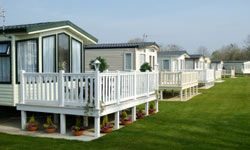
Ridgeway, Virginia, feels like a case study in suburban anxiety. For years, the Shady Rest mobile home park on U.S. 220 was a local headache. Homes sat close together, debris piled up, and the whole place looked neglected. When it closed, neighbors breathed a sigh of relief. But now, new owner Atul Chumble wants to reopen it. He plans to update the community into a livable space, not another eyesore. Locals are nervous, though. They want officials to watch the project closely. Chumble told them he hates eyesores too.
That reaction makes sense. “Trailer parks” have a bad reputation. Neighbors picture junk cars, sagging furniture, and falling property values. But they are likely looking through outdated lenses. The industry has shifted dramatically. Most people struggle to distinguish a modern manufactured home from a traditional site-built house. Today, these homes feature garages, landscaped yards, and multi-story designs. They include ENERGY STAR appliances and efficient heating and cooling systems. More than 17 million Americans live in these structures.
Here is what the data says about why 17 million people chose this path.
The Cost Gap Is Still Massive
Affordability remains the biggest driver. In 2007, Jim and Debby Laramie bought a new 1,720-square-foot modular home in Gulfport, Florida. They paid $118,000. In that same county, the median price for a single-family house was $210,000. They saved $92,000 on a brand-new, modern home.
The numbers hold up today. A manufactured home averages about $62,600. A site-built home averages $272,200. You also spend 10 to 35 percent less per square foot to build a manufactured unit.
This isn’t just for low-income buyers. The median household income for manufactured home residents is $34,700, but 24 percent of those households earn $50,000 or more. The average household has 2.7 people. It is a middle-class option, not just a safety net.
Factory Control Beats On-Site Chaos
If you have ever built a house from scratch, you know the risks. Contractors miss deadlines. Costs balloon. Weather delays everything.
Factories don’t have those problems. They build homes on assembly lines under strict federal regulations. The environment is controlled. No rain, no wind, no vandalism. Workers are efficient because they repeat tasks in a structured setting.
Factories buy materials in bulk, lowering costs that pass directly to you.
This control means fewer surprises. You get a predictable build process. The home arrives nearly 90 percent complete. You handle the foundation and utilities. The factory handles the structure. In-house and third-party inspectors check every stage.
Design Is No Longer Limited
The old image of a single-wide unit with a screen porch is gone. Modular homes now have vaulted ceilings, porches, garages, and decks. Some are multi-story.
You can customize the interior. Want granite countertops? Hardwood floors? Stainless steel appliances? Builders can do it. Companies like The Modular Center offer “Masterpiece Collection” homes ranging from 2,000 to over 5,000 square feet. These are not temporary shelters. They are permanent residences with serious design choices.
Understanding the Terms
A quick distinction matters here.
– Mobile homes : Built before 1976. No federal building standards applied.
– Manufactured homes : Built after 1976. Must meet federal standards.
– Modular homes : A type of manufactured home built in factories, then transported to your site for installation.
The terminology matters because the regulations changed everything. Since 1976, quality control has improved. The homes are built to higher standards than their pre-1976 predecessors.
Why Speed Matters
Factories can build a typical single-wide or double-wide home in about one-third the time it takes a contractor to build a site-built house. Once the home is on your lot, you can move in much faster.
Does speed mean cutting corners? No. Inspectors examine the structure before and after installation. Building codes are enforced. The process is fast because it is organized, not because it is sloppy.
The Ridgeway neighbors are worried. That is fair. But if they looked at the modern factory specs, the energy efficiency ratings, and the custom options, they might see something different than the debris-filled park they remember. The industry has moved on. The question is whether the neighbors are ready to see it.

4. Supremely Green
New-generation manufactured homes aren’t just cheap. They’re efficient. Factories now standardize ENERGY STAR appliances, high-performance windows, and tightly sealed heating and cooling systems. The construction process is controlled. No rain gets in while you’re waiting for the roof crew. No drafts from a poorly framed wall. The result is a home that holds heat in winter and keeps cool air in summer without fighting the weather.
How much does that actually save?
North Carolina A&T University and the U.S. Department of Energy ran a test that might surprise you. They built two identical 1,528-square-foot, three-bedroom, three-bath homes on the Greensboro campus. Both were empty. Researchers wired lights and appliances with timers to mimic real household usage. One house was the “base” control. The other was the “energy” model, packed with efficient materials and gear.
They expected the efficient house to beat the base model by 50 percent.
They were wrong.
After tracking energy use through a full winter heating season and a summer cooling season, the data showed a 55 percent savings. That’s not a typo. That’s not a theoretical number from a brochure. That’s measured performance over an entire year of operation. If you’re paying for electricity and gas, that percentage cuts your bill significantly.
5: Amenities
You want 10-foot ceilings? Ceramic tile? Hardwood floors? Walk-in closets?
You can get all of it.
Manufactured homes aren’t limited to linoleum and vinyl siding. Builders install high-end fixtures, jetted tubs, soaker baths, double sinks, fireplaces, bay windows, and gabled roofs before the unit leaves the factory. It’s the same list you’d see in a site-built home. The only difference is timing. The workers do the finishing work inside the plant, under a roof, with a power source.
Wall-to-wall carpet is common. So is top-of-the-line plumbing. Some units even come with multiple full bathrooms. It’s not a compromise. It’s a production advantage. You get the same aesthetic quality, often with fewer on-site delays and weather interruptions.
Tornadoes and High Winds
You’ve seen the photos. A tornado rips through a park. Homes lift off their foundations. The image sticks in your head. It makes sense to worry.
But here’s the regulatory reality. The U.S. government requires manufactured homes to withstand winds up to 110 mph (177 kph) in hurricane-prone zones. That’s not a suggestion. It’s a code.
Does that mean they’re indestructible? No. 110 mph is a threshold. Exceeding it, or hitting a home with debris, causes damage. But the baseline is higher than many people assume. The “vulnerable” reputation often comes from older models or improper anchoring, not from the current structural standards. Check your local building codes and the manufacturer’s wind rating before you dismiss the option entirely.
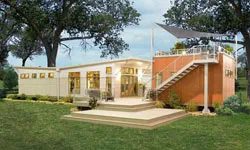
Why manufactured homes are often greener than site-built houses
You might think factory-built homes are the opposite of sustainable. Not really. The math works differently here. Factories cut waste. Precision manufacturing means less off-cuts, less trash ending up in landfills. And what scraps do get created? They usually get recycled.
It’s a stark contrast to a standard site build where material waste can pile up fast. Modular construction lets builders use less material without compromising a building’s structure. That efficiency isn’t just theoretical; it changes the environmental footprint before the house even hits the delivery truck.
“The i-house saves energy, water and reduces carbon emissions.”
Take Warren Buffett for example. His company Clayton Homes, a Berkshire Hathaway subsidiary, got in on the green game back in 2009. They launched the i-house. It wasn’t a concept car; it was a real product for real people.
How the Buffett-backed i-house hit the LEED Platinum mark
The i-house wasn’t trying to be a luxury estate. It was a 750-square-foot (69.6 square-meter) home with a price tag under $75,000. But under that modest exterior, the specs were aggressive on efficiency.
- Water: Roofs designed to collect rainwater. Low-flow faucets throughout.
- Energy: High-efficiency heat pumps.
- Certification: Platinum rating from LEED.
That LEED Platinum rating is the big deal. It’s the highest mark possible from the U.S. Green Building Council. You don’t get that by accident. You get it by engineering the home to save energy, conserve water, and cut carbon emissions across the board. It proved that a low-cost manufactured home could still meet the strictest environmental standards available.
Living in a community that values green building
Once you step past the factory floor, the social aspect kicks in. Manufactured homes don’t just sit in isolation; they often form communities. These aren’t the stigmatized “mobile home parks” of the 1970s. Many are planned communities with shared spaces, consistent architectural styles, and a focus on livability.
Why does that matter for your renovation plans? Because shared standards can make maintenance easier. If your neighbors are using similar materials or systems, knowledge transfers faster. You’re not the only one figuring out how to insulate a specific type of panel or how to maintain a rainwater collection system. The community becomes a resource.
It’s a practical benefit that flies under the radar. You get the efficiency of the build, and you get a network of people who likely faced the same DIY challenges you’re facing now.
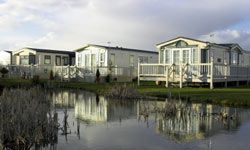
Why Manufactured Home Communities Beat the “Trailer Park” Reputation
The stigma sticks. You picture cracked pavement, rusted nails, and neighbors you don’t know. But look closer and the stereotype falls apart. Over 75 percent of manufactured homes actually sit on private property. The other 25 percent live in communities where you lease the lot. It is a specific arrangement, not a class of house.
The real advantage here is the labor. You stop worrying about the lawn. No snow plowing. No trash removal logistics. No chasing down a contractor for on-site repairs. You hand off the maintenance to the community management. Some of these places are gated, secure, and quiet. Others, particularly the 55-plus complexes, look more like small resorts than residential zones.
- Organized social events
- Walking trails
- Fitness centers
- Pools and tennis courts
- Golf courses
The landscaping is usually meticulous. The common areas stay clean. It is a trade-off. You give up some land ownership rights (if you are leasing) in exchange for a lifestyle that requires less physical upkeep.
Do Manufactured Homes Actually Hold Their Value?
Ask a site-built contractor and they will tell you no. They will say your home is depreciating the moment it touches the ground. That is a myth.
A manufactured home, if built well and maintained, appreciates just like a site-built one. The value hinges on market forces, not the construction method.
- Local housing trends
- The specific neighborhood
- Initial purchase price
- Inflation rates
- Age and condition of the structure
- Location
There is data to back this up. In 1993, researchers at the University of Michigan studied adjacent neighborhoods. Their conclusion? Manufactured homes did not drag down the property values of nearby site-built homes. The fear that a “trailer park” next door tanks your equity is not supported by that research.
Even the financial elite see it. Warren Buffett bought Clayton Homes Inc. in 2003 for $1.7 billion. Clayton is based in Knoxville, Tenn. In his 2011 letter to investors, Buffett suggested his company’s model should guide government housing reform. If the richest investor in history thinks it is a good bet, maybe you should stop worrying about the stigma.
The Warranty Trap: What to Check Before You Sign
Think back to your last home purchase. Something broke. You called the contractor. Did they show up? Probably not. Or they came late. Or the fix was half-hearted.
Manufactured homes come with a different structure. Most have a one-year construction warranty. Then you get separate warranties for:
- Windows and doors
- Siding
- Faucets and plumbing
- Appliances
Retailers often offer extended coverage, too. This is where you need to be careful, especially with used homes. The warranty might not exist. Or it might be a summary, not the full legal document.
Before you hand over the keys, get the complete warranty. Not the flyer. The actual contract. Then ask:
- How long does it last?
- What is covered? What is excluded?
- What voids it?
- Who performs the work? Is it the builder, the installer, or the retailer?
- Does poor site preparation void the coverage?
If the answer to number five is yes, you need to know that. If you do not prepare the foundation correctly, you might be on the hook for the repair. Keep the warranty current. If it requires renewal, do it.
Quick Answers: Cost, Quality, and Placement
What is the difference between modular and manufactured homes?
Manufactured homes are built in a factory and transported to your site on their own chassis, in one piece. Modular homes are built in sections, shipped on flatbed trucks, and assembled on-site. Modular units usually offer more customization options.
Can you put a manufactured home anywhere?
No. You must follow federal, state, and local regulations. Most people place them in dedicated communities or on land they already own. Zoning laws dictate where you can go.
How much does a manufactured home cost?
The average price is around $62,600. Compare that to a single-family site-built home, which averages $272,200. That is a massive gap.
Is it cheaper to build or buy?
Manufactured homes cost 10 to 35 percent less per square foot than site-built homes. That percentage reduction makes homeownership accessible for people who were priced out of the traditional market.
Who builds the best quality manufactured homes?
According to industry reviews, Kit Custom Homes, Sunshine Homes, Deer Valley Homebuilders, and Fleetwood Homes are top-tier choices. Champion Home Builders and Clayton Homes are also well-known, reputable names in the space.
The value is not in the label. It is in the condition, the location, and the terms of your lease or deed.
The gap between the $62,600 average and the site-built alternative is not just a number. It is the difference between renting forever and owning a place to call home. You just have to read the fine print.