


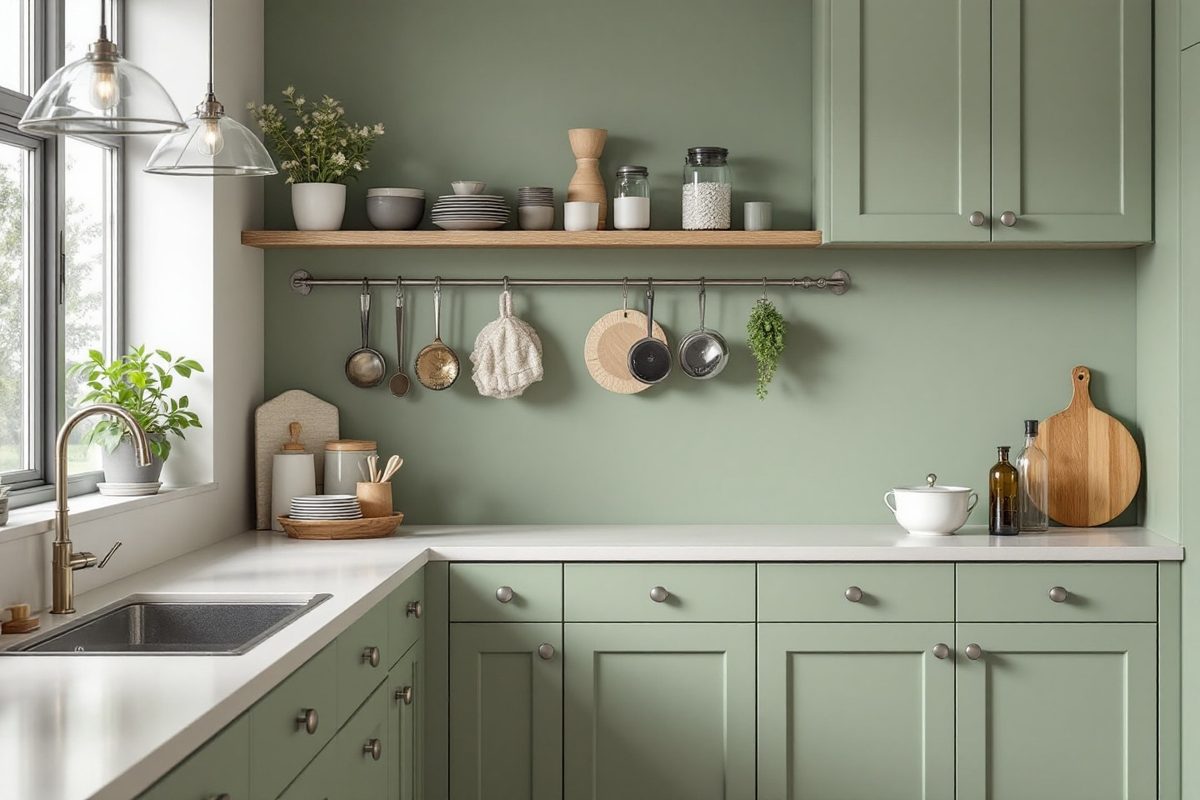
You walk into your kitchen and feel a strange disconnect. It looks clean. It looks current. But it doesn’t look like you.
It feels like you’ve scrolled through too many Instagram feeds this autumn. Every cabinet, every backsplash, every open shelf mimics the same aesthetic. You want freshness. You want novelty. Instead, you get a ghost of a trend that’s already exhausted.
The culprit? Sage green.
Once the undisputed king of modern kitchen design, this muted, earthy tone is now signaling a lack of imagination. For 2026, the narrative is flipping. What was once a safe, sophisticated choice is now viewed as lazy design. If you are planning a renovation or just refreshing your space, you need to understand why this specific hue is falling out of favor and what’s replacing it.
The Fast Life of Decor Trends
Interior design moves at the speed of a viral post.
Yesterday’s “must-have” is today’s cliché. The influence of social media has accelerated the lifecycle of colors and materials to a dizzying pace. We are conditioned to update our spaces constantly to stay relevant. But in a kitchen—where you eat, cook, and live—this churn is expensive and ecologically wasteful.
When a color becomes too popular, it loses its soul. It becomes uniform. It becomes boring.
The Sage Green Saturation Point
For the past three years, sage green has dominated the conversation. It wasn’t just a color; it was a lifestyle brand. It promised “slow living.” It promised tranquility. It promised a connection to nature without the mess of actual plants.
Big-box stores like IKEA and Maisons du Monde flooded their catalogs with it. Pinterest boards were drowning in it. It was the default choice for anyone wanting a kitchen that felt calm, organic, and post-pandemic safe.
It worked for a while. It paired well with wood countertops. It looked great with open shelving and natural fiber accessories. It was easy to harmonize.
But easy is the enemy of unique.
By 2026, we have reached the saturation point. The “sage green fatigue” is real. Designers and homeowners are reporting a visual weariness. The color has become so ubiquitous that it no longer signals good taste; it signals conformity. It signals that you didn’t take the risk to define your own space.
Many manufacturers have already begun reducing their sage green inventory in their Autumn/Winter 2026 collections. They know the mood has shifted. The search is now for singularity. For personality. For colors that won’t feel dated in six months.
The Hidden Costs of Following Trends
Renovating a kitchen is not like buying a new vase or a throw pillow.
It is a significant financial commitment. It requires time, planning, and disruption. When you choose a color based solely on its current trend status, you are gambling with that investment.
The “Catalog” Effect
There is a specific kind of emptiness that comes from a perfectly styled, trend-following kitchen. It looks great in a photo. It is Instagram-ready. But does it feel like home?
Probably not.
When everyone uses the same palette, the kitchen loses its individual character. It becomes a showroom. It becomes sterile. You lose the “soul” of the room—the quirks, the personal touches, the history. A kitchen should reflect the people who live there, not the algorithm showing them what to buy.
The Economic Trap
What happens when the trend dies?
If you installed sage green cabinets three years ago, you are now stuck with them. Or, you face the staggering cost of a full remodel. Painting is an option, but it’s still labor and materials. Replacing cabinetry is a major expense.
Professionals are increasingly advising against high-commitment color choices that are tied to short-term fads. Instead, they recommend:
- Timeless neutrals for large surfaces (cabinets, walls).
- Modifiable accents for color (backsplashes, textiles, hardware).
- Bold, unexpected hues that signal confidence rather than conformity.
The goal is to build a kitchen that ages with grace, not one that expires with a trend cycle.
Breaking Away from the Standard
So, what is the alternative?
The shift in 2026 isn’t just about rejecting sage green. It’s about embracing more assertive, less predictable choices. Homeowners are looking for colors with more presence. They are moving away from the “safe” pastels toward tones that demand attention.
This doesn’t mean you need to rip out your existing cabinets tomorrow. It means being intentional about where you spend your design energy. Use sage green if you love it. But don’t use it because it’s what everyone else is using.
The most refreshing thing you can bring to a kitchen today is a point of view.
The trend cycle will turn again. Another color will be crowned the new “calming neutral.” Then it will be replaced. If you anchor your space in trends, you’ll never be free of the need to update. If you anchor it in your own taste, you’ll always have a sanctuary.
What’s the last color you added to your kitchen? Did you choose it because you loved it, or because you saw it everywhere?
The hesitation is real. You pick a paint swatch. You buy the fixtures. Then six months later, you’re staring at the same wall thinking, Did I make a mistake? The decor world is shifting. For Autumn 2026, the trend isn’t about going bold for the sake of it. It’s about warmth. Refined vibrancy.
We are moving away from the sterile and toward the mineral.
Earthy Tones That Pros Are Quietly Using
Instagram is saturated with sage green. It’s everywhere. But the designers? They are stocking their palettes with ochre, burnt sienna, light terracotta, and caramel brown. These aren’t just colors. They are textures you can see. They pair with raw materials: light wood, natural linen, rattan, jute, and artisanal ceramics.
The result is instant cocooning. The days get shorter. The light gets lower. You want a space that feels grounded, not loud.
- Golden Ochre : Use it on a single wall or a backsplash. It warms up the room without closing it in.
- Soft Rust : Pair this with blonde wood. The contrast softens the intensity of the red.
- Honey Ceramics or Caramel Brown : Don’t paint everything. Put these tones on dishware or cabinet handles. It’s a low-risk way to inject color.
How to Build a Unique Kitchen Without a Total Reno
The trap is the “total look.” Doing everything at once usually looks dated by the next season. The goal is to capture light and create depth.
Try painting just one panel of a wall. Integrate a hand-woven Berber rug in cinnamon tones. Stack artisanal brown wood boards on open shelves. It’s about accumulation, not replacement.
Add rattan pendant lights. Hang lightweight curtains with ethnic patterns. Swap out standard cabinet knobs for ceramic ones. Suddenly, the kitchen isn’t just a room. It’s a signature.
The key is layering. Don’t replace the cabinetry. Replace the atmosphere.
How to Personalize Without Regretting It in Two Years
Fear of commitment kills good design. You don’t need to knock down walls or order custom millwork to have a unique space. The strategy is modularity and reversibility.
- Keep the permanent stuff neutral : Base cabinets, major appliances, and flooring should stay in natural or neutral tones. These are the anchors.
- Use color for emphasis : Paint a niche. Add a removable adhesive backsplash. Color one wall. Highlight the chairs.
- Lean on textiles : Towel racks with patterned cloths. Seasonal curtains. Washable rugs. These are cheap updates. You can change them as trends shift.
Alternatives to Overused Colors to Try Now
If you are tired of the same palette, look at what else works. Autumn 2026 offers plenty of depth.
- Slate Blue : It’s deep. It’s timeless. Set it against a light wood countertop. It makes a strong return.
- Subtle Ivory : If your kitchen faces north and lacks light, ivory brightens it up. It’s gentle on the eyes.
- Deep, Nuanced Greens : Think olive or forest green. You get the botanical vibe without the blandness of standard sage.
- Copper or Brass Touches : Update your faucet. A brass pendant light. Copper handles. It makes the whole space pop for very little money.
Adjust the small details each season. Celebrate the golden autumn light. Prepare for the cozy winter. But keep your own style at the center.
Challenging the status quo isn’t about being contrarian. It’s about durability. It’s about liking your home. Standardization is easy. Originality takes work. But the result is a kitchen that feels like yours.


