


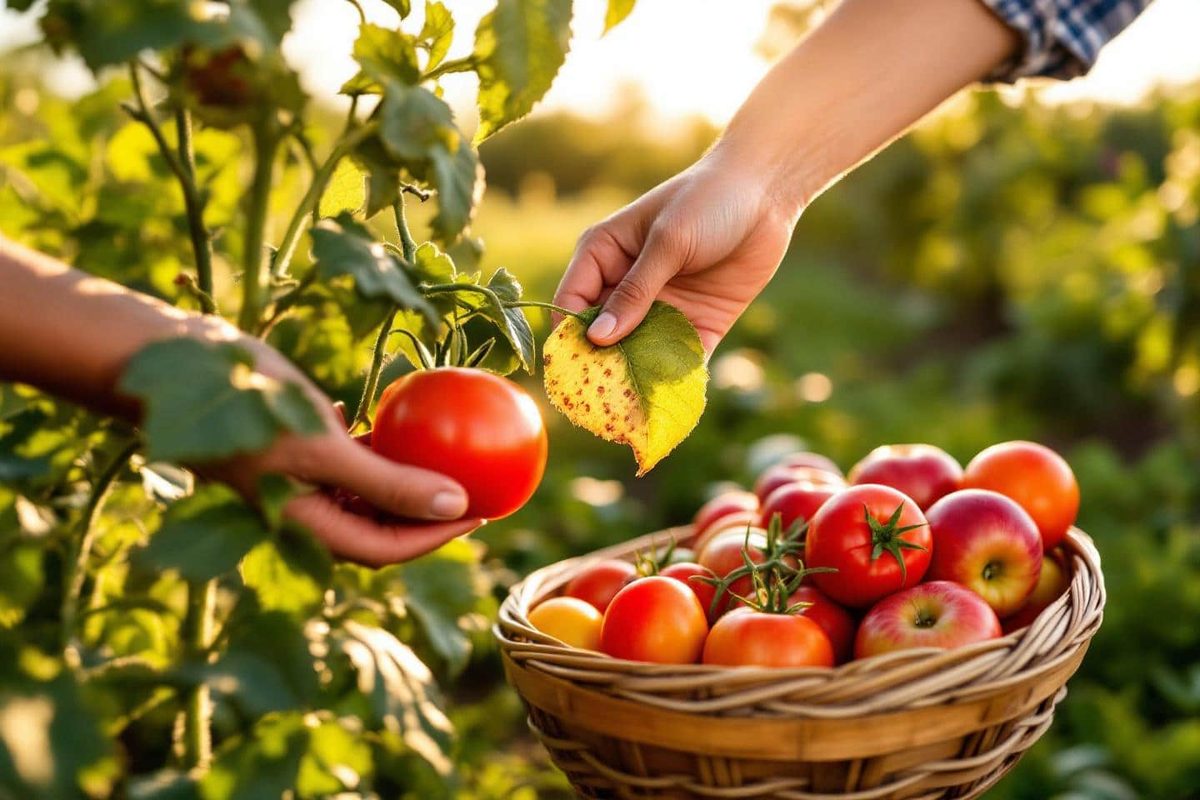
June days are long and bright. The garden is heavy with promise. But beneath the lush green growth, a quiet crisis is brewing. For experienced gardeners, the priority isn’t just watering or weeding. It is watching the leaves. Specifically, the leaves of apple trees and tomatoes. This small, discreet habit determines whether you get a bountiful harvest or a pile of rotting fruit. Why does this early summer check matter so much? And how do you actually do it without losing your mind?
Why monitoring apple and tomato leaves in June makes all the difference
June feels like the height of summer. The days are hot. Plants are shooting up. But for your crops, this is the danger zone. It is the entry point for cryptogamic diseases. These fungal threats are subtle. They are also deadly if you let them settle in.
The arrival of seasonal diseases: an underestimated risk
Signs of trouble rarely announce themselves with a bang. You won’t see a dramatic collapse on day one. Instead, you get a beige spot. A yellowing leaf edge. That is when the infection starts. June combines heat with humidity. This creates the perfect climate for fungi. Wind spreads them. Water splashes them onto healthy tissue. One forgotten leaf can infect an entire bed of tomatoes or an apple branch.
This danger is often minimized. It shouldn’t be. The vigilance you show in June dictates your August harvest. This is especially true in wet years. Pathogens thrive when the air stays damp.
A single overlooked leaf can compromise a whole season’s worth of fruit.
Wilted and diseased leaves: how to spot them effectively
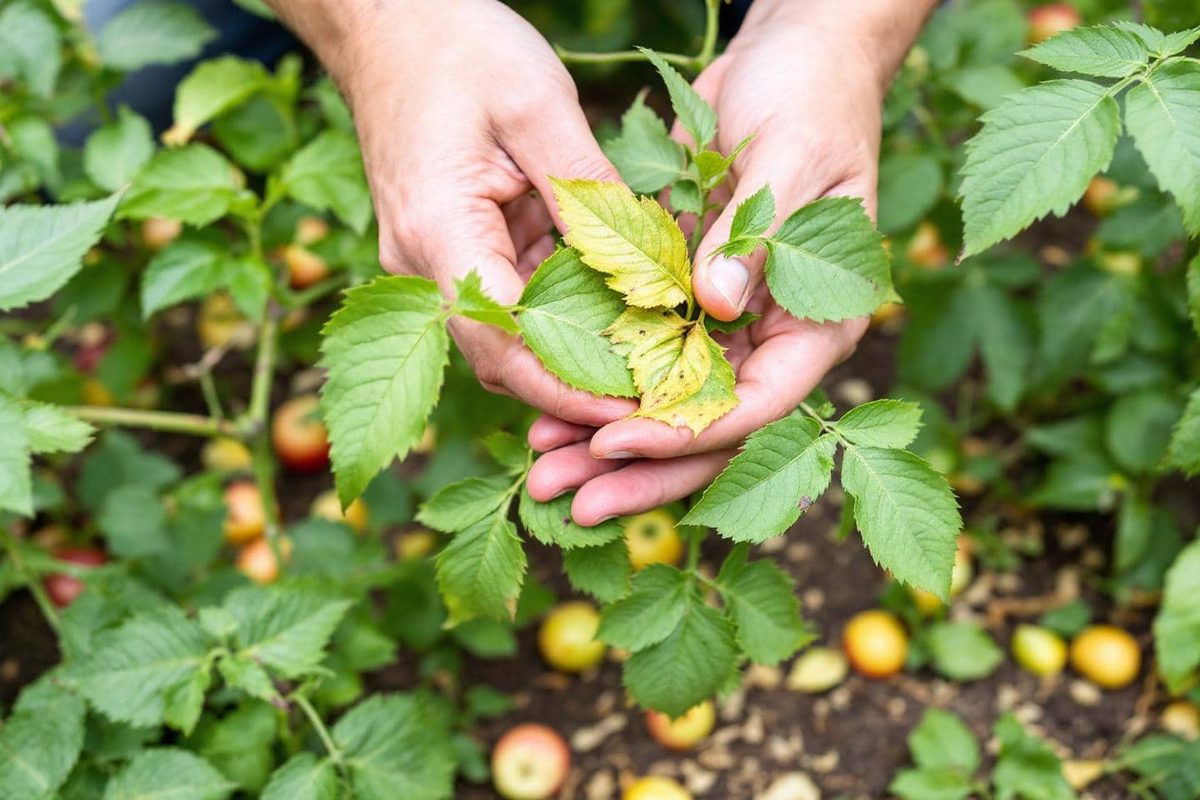
Identifying sick leaves is a skill. It requires a trained eye. A diseased leaf isn’t always completely brown or dead. Look for small dark spots. A velvety texture on the surface. Wavy, distorted edges.
For tomatoes, symptoms often start at the base of the plant. The air circulates less there. Humidity lingers. This is where fungus likes to hide. For apple trees, check the undersides of the leaves. Apple scab often begins its attack on the reverse side. You have to look closely to see it.
The key is consistent observation. Aim for twice a week. Your eye will learn to spot suspicious leaves instinctively over time. You will know which ones to pull first. This competence is valuable. It separates the amateur from the pro.
Adopt the right technique: pruning to maximize your harvest
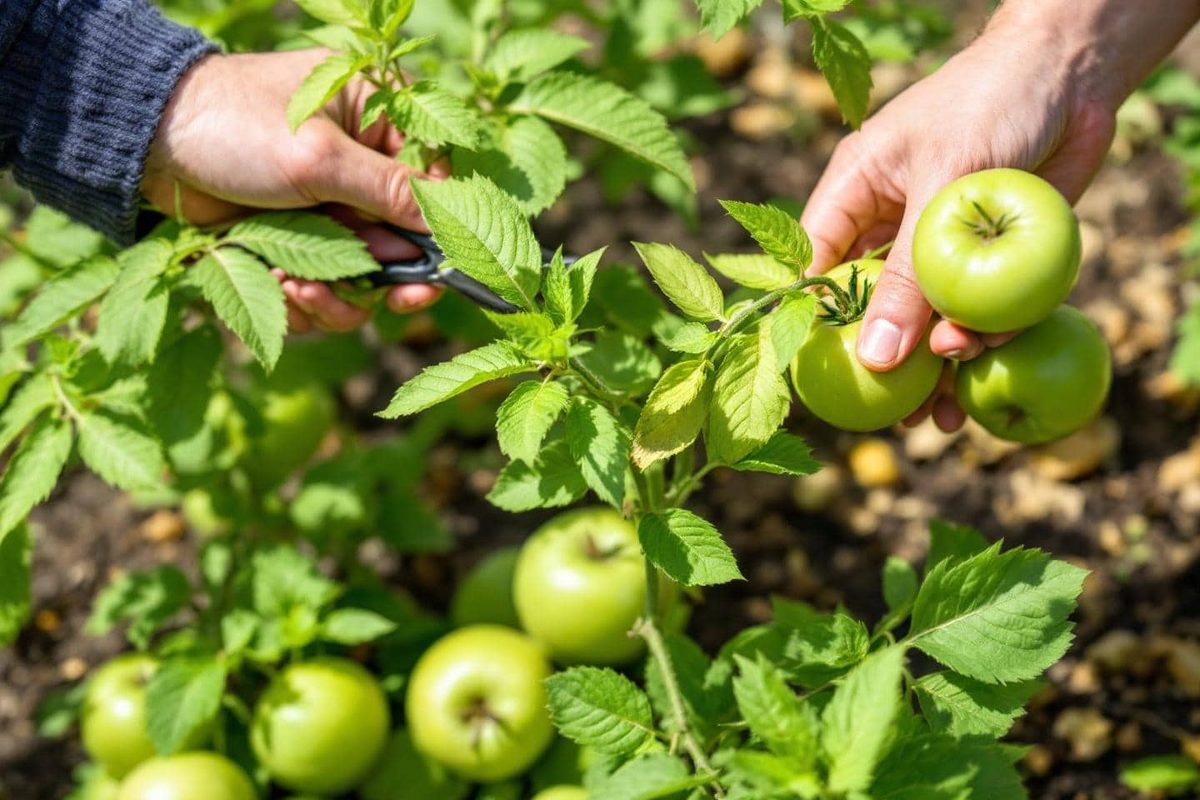

When you see damaged leaves, hesitation is the enemy. Immediate action protects your upcoming harvest and moves you toward a garden bursting with health.
Tools and techniques to remove damaged leaves properly
A clean pair of secateurs, light gloves, and a bucket are standard for the prepared gardener. You must disinfect your tools between each plant to avoid accidentally acting as a vector for pathogens. Some gardeners prefer using a dedicated pair of scissors for this task, wiping them clean after every pass.
The trick is to cut the infected leaf while leaving a small margin of healthy tissue. It is better to sacrifice a bit more foliage than to risk leaving the disease behind. For tomato plants, removing lower leaves also improves air circulation, making the microclimate less favorable for infections.
How often to intervene to prevent spread
Consistency is key. In June, a check every three or four days is often enough to keep things under control. However, during humid periods or after a thunderstorm, it is better to check every morning. Speed of intervention is critical : one forgotten infected leaf can contaminate several neighbors in just a few hours, especially on a dense tomato plant or a leafy apple tree.
For apple trees, it is also recommended to collect fallen fruits and dispose of them away from the compost pile. As for infected leaves, they go into a sealed bag or the fire. A compost pile would serve as a refuge for them and fuel their return the following season.
Healthy fruits, a garden in top shape: concrete benefits
The act of thinning foliage is not trivial. Its effects translate spectacularly into the quality of the harvest and the overall health of the garden, visible within the first few weeks.
Abundant harvests and spotless tomatoes: visible results
Nothing beats the pride of harvesting a smooth, firm, and colored tomato, or a promising apple without a single suspicious spot. This excellence is achieved less by luck and more by these small, discreet daily actions. Resistant varieties give a head start, but the regular removal of damaged leaves remains the most effective shield against disease.
In many gardens, gardeners who have adopted this reflex notice up to 30% fewer damaged fruits at harvest, clear proof of the impact of this simple gesture. Fewer treatments, more fruits to share: the benefit is considerable for a minimal time investment.
Preserving garden health throughout the summer season
Healthy foliage means a balanced ecosystem. By reducing disease pressure starting in June, you avoid the spiral of curative treatments and repeated plant stress. Plants thus spared see their growth flourish and continue producing tirelessly until the end of summer.
Beyond the orchard or individual vegetable patch, this care has a beneficial effect on the entire garden: fewer infection sites, fewer insects attracted by weakened vegetation. The approach fits fully into an eco-responsible logic, so precious for gardeners concerned with natural balance.
Anticipating for summer: experienced gardener tips
Preventing new plant diseases through smart watering
The secret isn’t magic. It is simple mechanics. Most gardeners spray their plants from above. That is a mistake. Water on leaves creates a humid microclimate. Fungi love it. Bacteria thrive in it.
Switch to watering at the base of the plant immediately. Direct the hose or watering can to the soil. This keeps foliage dry. It starves the pathogens before they can start.
This single change reduces fungal outbreaks significantly. You are cutting off their primary transmission route.
Pruning and spacing for airflow
It is not just about water. It is about air. Stagnant air is a recipe for rot.
For tomatoes, space your plants out. Do not crowd them. Add a layer of mulch around the base. This stops soil-borne spores from splashing up during rain or irrigation. The mulch acts as a barrier.
Apple trees need similar attention. Excessive nitrogen fertilization is dangerous. It causes rapid, weak growth. That new growth is tender. Susceptible to disease. Reduce the nitrogen. Focus on balanced nutrition.
Perform light pruning. Remove unruly branches that block light. An open canopy dries faster after rain. It withstands summer storms better. A healthy tree does not panic when the weather turns.
Sharing sustainable gardening habits
Gardening is communal. You learn by watching. You learn by doing.
Teach others. Show them that chemical sprays are not the only solution. When you demonstrate these simple steps, you inspire neighbors. You build collective pride in a healthy garden.
Consistency matters more than intensity. Observe your plants weekly. Check for early signs of stress. Treat vigilance as a joyful routine, not a chore. This mindset shift yields better harvests year after year.
Key surveillance points for success
You need a system. Random checks are not enough.
Commit to two walks per week through your garden. Look closely. Do not skim. Spotting a problem early allows for a small response. Ignoring it leads to a full-blown infestation.
Keep your tools clean. Wipe blades between plants. If you find diseased leaves or branches, remove them immediately. Do not compost them. Burn them or trash them. Contain the spread.
Toward a worry-free harvest
Every leaf matters. Every flower counts.
When you protect the foliage, you protect the fruit. Imagine tomatoes free of blight spots. Imagine crisp apples straight from the tree. This is what careful stewardship delivers.
These small attentions renewed each year define a productive garden. They create a cycle of health.
Why wait? Start this habit now. June is the perfect time to adjust your routine. A few minutes of daily care prevents weeks of panic later.
Your pantries will be full. Your food will be safe. The work is worth the reward.


