


It is late June. The sun is brutal. You want to cool down your outdoor space, so you grab the hose.
Big mistake.
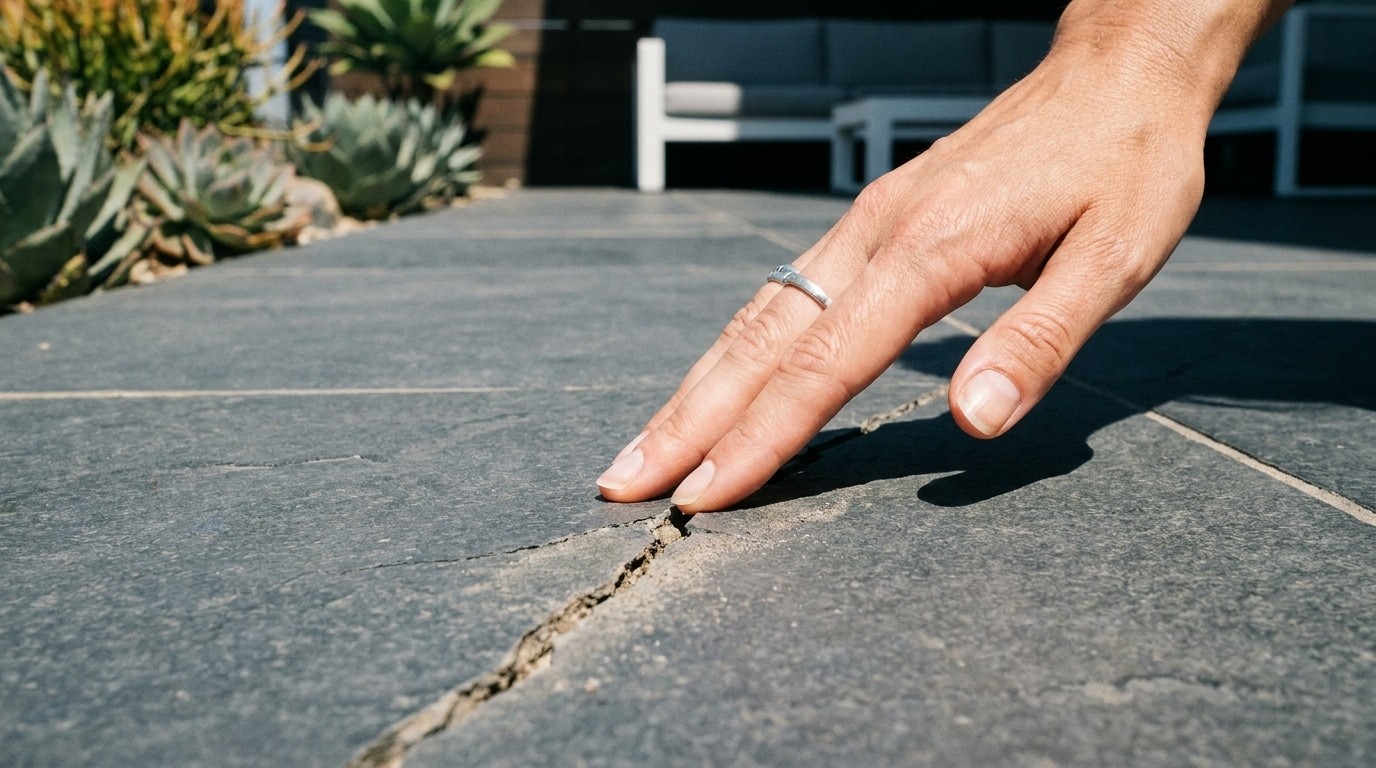
That innocent spray of water on a scorching hot terrace doesn’t just clean it. It kills it. Slowly. Quietly. Until you notice the cracks.
The urge to refresh a sun-baked patio is natural. But spraying cold water on overheated materials creates a thermal shock that can cause irreversible damage to your hardscaping. You might not see it happening until it is too late.
The Science of the Shattered Tile
Patio stones, natural stone, and ceramic tiles act like sponges for solar radiation. In peak summer, surface temperatures easily exceed 50 degrees Celsius. That is enough to burn bare feet.
When you blast that heat with cold tap water, you create a violent contrast. The material is expanded from the heat. The water hits it. The surface contracts instantly.
This rapid shrinkage puts immense mechanical stress on the structure. It is not just a surface issue. The stress travels through the slab. Micro-fissures form. They are invisible at first. Then they become visible. Then they become catastrophic.
Joints made of cement or mortar are the weakest link. They cannot handle this rapid expansion and contraction cycle. They crumble. They detach. Your tiles start to shift.
Why Thermal Shock Destroys Outdoor Surfaces
The problem is not the water itself. It is the temperature delta.
Hot stone. Cold water.
When the temperature drops suddenly, the material shrinks. If it shrinks faster than the underlying structure can accommodate, stress builds up. This fatigue weakens the bond between the tile and the mortar.
Eventually, the grout gives way. The tile loosens. Water gets underneath. The cycle repeats.
This is why you see crumbling joints and cracked tiles in the middle of summer. It is not poor installation. It is thermal shock.
How to Clean Your Patio Without Causing Damage
You need a method that respects the materials.
1. Wait for the cool down
The golden rule is simple: do not water your patio during the day. Wait until evening. Let the stone release its stored heat naturally. Once the surface temperature drops to near ambient levels, the risk of thermal shock disappears.
2. Clean in the morning
If you must clean during the day, do it early. Early morning is the safest window. The stones have cooled overnight. The sun hasn’t heated them up yet. The temperature gradient is minimal.
3. Use tempered or shaded water
If you use water from a rain barrel, it is already shaded and likely cooler than the air. Still, ensure it is not ice cold if the ambient temperature is high. The goal is to minimize the difference between the water temperature and the surface temperature.
Better Long-Term Solutions for Patio Care
Thermal shock is a symptom of extreme heat exposure. The real fix is reducing that heat in the first place.
Install shade structures
Tension a shade sail. It is elegant. It is practical. It blocks direct solar radiation before it hits your stone. This keeps the surface temperature lower throughout the day. You reduce the stress on the material naturally.
Choose materials wisely
Lighter colored stones reflect more heat. Dark stones absorb it. If you are planning a renovation, consider the thermal properties of your materials. Porcelain tiles can still crack under thermal shock if not installed with proper expansion joints. Natural stone varies in density and heat retention.
Regular maintenance
Check your joints regularly. If you see cracks, repair them before water infiltrates and freezes in winter. Summer heat expands the cracks; winter cold widens them.
The Bottom Line
Your patio is an extension of your home. It deserves the same care as your interior floors.
Stop treating hot stone like a car radiator. Do not blast it with cold water. It will crack. It will fail.
Wait for the sun to go down. Clean when it is cool. Protect it with shade.
Your terrace will last longer. Your bank account will thank you.
Have you considered how much heat your current materials are holding? Look closer. The cracks are already forming.


