


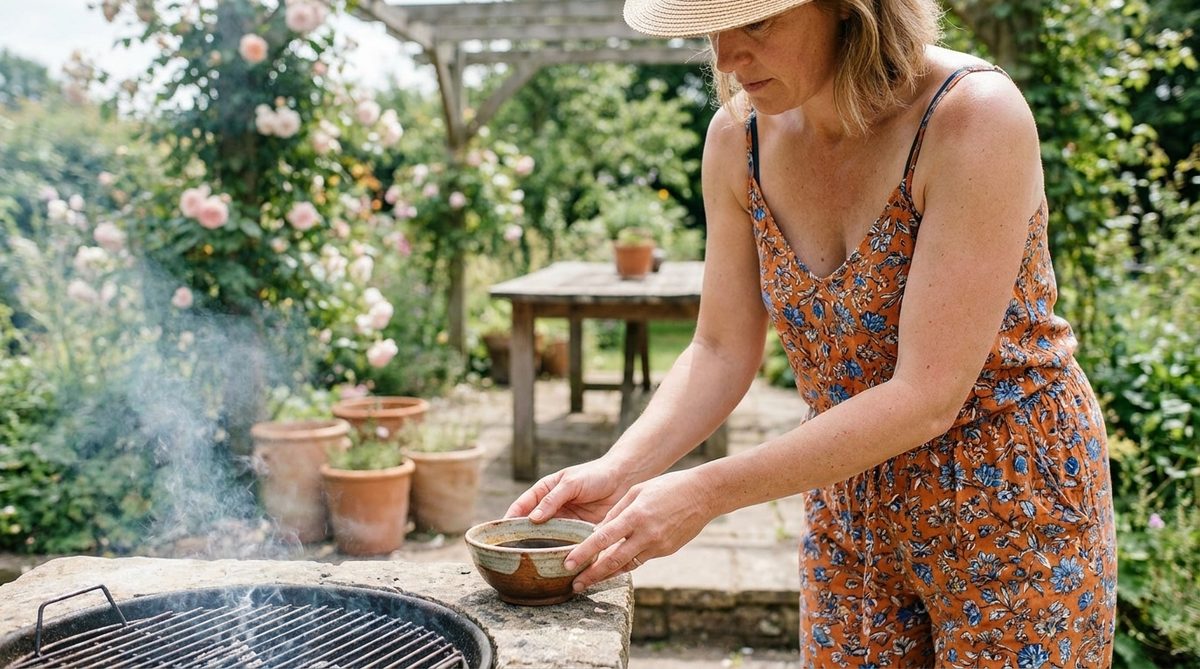
The grill is hot. The sausages are sizzling. You’ve just poured a cold drink. Then you see them.
Striped wings. Hovering.
One minute you’re enjoying a summer afternoon; the next, you’re swatting at the air like you’re fighting off a swarm of angry bees. It ruins the mood. It ruins the meal. You don’t want poison sprays clouding your food. You don’t want to panic.
There is a better way. A simple, natural method that has been working in gardens for years. It requires no chemicals. No expensive gadgets. Just a bowl, a few pantry staples, and one crucial rule about placement.
The Bowl That Changes Everything
Look over your fence. Maybe your neighbor has done it. A small bowl sits on the ground or a low wall. It seems harmless. Unremarkable.
But it works.
It stops the frantic arm-waving. It stops the anxiety of watching every bite. When you use this trick, the wasps leave your food alone. They go elsewhere. You get to eat your melon and your grilled meat in peace.
This isn’t magic. It’s olfactory engineering. You are redirecting their attention before it even reaches your plate.
The Secret: Apple Cider Vinegar
Most people think of vinegar as a cleaning agent. Or an acidic punch for pickles. But for wasps, it smells like dinner.
Specifically, apple cider vinegar.
White vinegar is too sharp. It repels. Apple cider vinegar smells fermented. It smells like apples breaking down on the ground. It smells like sugar. To a wasp, that scent is irresistible. It mimics a ripe fruit fallen in the orchard.
You are creating a decoy. A fake feast.
Add Sugar to Make It Irresistible
Vinegar alone isn’t enough. Wasps need energy. They crave carbohydrates.
Mix the vinegar with sugar. White sugar works. Brown sugar works. Even an old jar of jam will do.
The goal is to create a sweet, sticky nectar. The aroma of this mixture is far stronger than your tomato salad. It is far more tempting than your chicken skewers. The wasps will ignore your food. They will follow the scent to your bowl.
The Golden Rule: Three Meters Away
This is where most people fail.
They put the bowl on the table. Right next to the salt shaker.
Do not do this.
If you put the bait close to your food, you are calling them to you. You are inviting the swarm to your lap.
You must place the bowl at least three meters away from your seating area.
This distance matters. It allows the wind to carry the scent away from your table. It draws the wasps out of your personal space. It creates a buffer zone.
Keep the bait far away. Keep your table clear.
Why This Works (Without Angering the Colony)
Wasps are smart. They communicate.
If you swat a wasp, it panics. It releases alarm pheromones. These signals scream “DANGER” to the rest of the hive. Suddenly, five wasps become fifty.
Your vinegar trap avoids this.
The wasps land on the bowl. They eat the sugary vinegar. They leave. They return to the nest. No fight. No alarm. No reinforcements.
The colony never knows you are there.
The Science of Scent
In the garden, scent is king. Wasps have an incredible sense of smell. They can detect amino acids in meat from yards away.
But they prioritize sugar.
When they detect the sweet, fermented apple scent, their navigation system recalibrates. The smell of your barbecue fades into the background. The sweet bowl becomes the only objective.
It is a biological switch. You flip it. They go.
Set It Up Before You Grill
Don’t wait for the first wasp to appear.
Prepare the mixture before you light the grill. Mix the apple cider vinegar and sugar in a shallow bowl. Place it three meters away from your dining spot. Test it.
Does the wind carry the scent away from you? Good.
Now, light the fire. Sear the meat. Pour the drinks.
Watch the striped wings hover near the bowl, not your plate.
It sounds too simple to work. But it does. The key is the distance. Keep the bait far. Keep your peace.
The summer is long. The grill is ready. Let the wasps follow the sugar.
You don’t need expensive gadgets. You need a specific chemical reaction that hits the wasps’ sweet tooth but misses your skin.
The mixture is simple. Start with 250 ml of apple cider vinegar. This is the base. It smells sharp to us. To wasps, it’s a complex signal—part rot, part ferment. That confusion is what draws them in.
Next, add 3 tablespoons of granulated sugar. The sugar provides the energy spike they crave. It overrides the vinegar’s acidity in their sensory processing.
Then, stir in 1 tablespoon of honey. It’s optional. But it adds depth. The enzymes and floral notes make the bait irresistible.
Finally, add half a cup of warm water. Just enough to dissolve the sugar and honey. Mix it until the liquid is homogeneous. The heat from the sun will help the vapors rise. The scent plume will carry for meters.
Choosing the Right Vessel to Save the Bees
If you just dump this in a bucket, you get a wasp graveyard. And you kill the pollinators. That’s bad for the garden.
You need a trap that drowns the wasp but lets the bee escape.
Use a shallow bowl. Not a deep pitcher. The walls should be slightly rough. Or, drop in a few small pebbles or marbles.
Why?
Wasps are heavier. They sink. Bees are lighter. They can land on the pebbles. They drink. They fly away.
This isn’t just cruelty-free. It’s smart ecology. You keep the wasps away from your table while preserving the insects that pollinate your tomatoes.
The Three-Step Strategy for Outdoor Dining
If you remember nothing else, remember the geometry of the trap.
Place the bowl three meters away from your dining area.
Three meters is the magic distance. Wasps have a foraging range. They will investigate the scent. They will follow it. But they won’t follow it past that three-meter mark.
Keep the trap away from people. Keep your face away from the bowl. The goal is to lure, not to catch them in your lap.
Boosting the Barrier on Your Patio
If the wasps are already swarming, the vinegar trap might not be enough. You need stronger olfactory masking.
Try these additions:
- Burn dry coffee grounds. Put them in a small saucer. Light it. The smoke masks human scent and food odors. Wasps hate the smell.
- Poke cloves into lemon halves. Stick whole cloves into the rind of a yellow lemon. Place them on the table edge. The citric oils and eugenol repel them.
These are old-school tricks. They work because they overload the wasps’ sensitive antennae.
The result is a bubble of calm. You eat. They hunt the vinegar. No buzzing in your ear. No fear of a sting on your lip.
It’s just chemistry. And a little patience.


