



If your living quarters are getting cramped, it’s only natural to look around for new places to stuff your stuff. Live anywhere long enough, and you’ll run out of room. It’s a law of nature. Cars have trunks for the very purpose of making it easy to accumulate appliances, accessories, craft items, décor elements (not yet installed), apparel and any number of sports, entertainment, kid-related, pet-friendly and green essentials. Is it any wonder that people are adding outdoor rooms to their homes and investing in cute baby-barn storage sheds? Before you add a new room to your house, though, take a look up instead of out to see if you can employ some underutilized vertical space for your storage needs and even a few of your design ideas, too.
How to Maximize Vertical Space with Stackable Furniture
Stackables shouldn’t be a new idea to you. Think of that bunk bed you slept in at camp or in college. The space over your head is going to waste, and filling it by putting useful items on top of one another is a stroke of space-saving genius. The only problem is that getting to the stuff on top and dismantling the pile to get to the stuff on the bottom can be a big pain. This is where good planning comes in. Creating stacked solutions that sit comfortably on one another, or are attached to a supporting frame that makes access easy, offers optimum space utilization with a minimum of inconvenience.
You can buy a stackable washer and dryer. You can even buy platform beds with under-bed storage that effectively stacks your bed on top of your chest of drawers. There are stacking occasional tables with smaller tables nesting underneath taller ones. You can stack shelves, home office file cabinets, CD collections and even electronic components. Evaluate your needs, and then take a look around your local furniture outlet or home improvement store. There are more nifty stackable solutions than you might think.
Where to Add Vertical Storage Units
Vertical space is perfect for storage. If your furnishings look drab because you have very few things to draw the eye upward, vertical storage can be a decorative and practical solution. Adding an armoire to your bedroom, an entertainment center to your living room or a baker’s rack to your kitchen are attractive and functional ways to increase the storage in your home by utilizing the vertical space with furnishings that elongate the look of your rooms and use the space more effectively.
TLC Tip: Storage is where you find it, and if space is really tight, don’t forget to use the space inside your luggage (well, if you aren’t using it), the area behind the couch, and of course, under the bed.
Best Freestanding Shelving for Decor and Organization
Freestanding and modular shelving units accommodate books, decor and other household items to enhance the room’s aesthetics and organization. These units let you rearrange your space as your needs change. They are easy to move, easy to assemble, and often do not require anchoring to the wall, making them ideal for renters or those who like to shift their layout frequently.
Using Loft Furniture to Create Functional Zones
Invest in loft furniture and vertical gardens to further exploit vertical dimensions, adding functionality and visual interest to compact environments. A loft bed raises your sleeping area to the ceiling, freeing up the floor space below for a desk, a lounge chair, or a play area. This is a common strategy in studio apartments and dorm rooms. The vertical garden adds life to the space while utilizing wall space that would otherwise go unused.


You don’t need a contractor to claim vertical space. Shelves are the obvious answer for storing heavy books, magazines, or albums without cluttering the floor. Prefab units now come in nearly any height, including floor-to-ceiling options that keep your collections secure and off the ground. You can avoid the nightmare of renting storage units or hiding your hobbies in the garage.
Freestanding bookshelves that collapse or stack make oddly shaped rooms surprisingly manageable. But don’t limit yourself to wall-mounted units. Look at the space under a staircase, inside a linen closet, or within a kitchen pantry. Custom designs can turn these awkward nooks into highly functional storage zones.
Transforming Bedrooms with Loft Beds
The classic bunk bed has evolved. It’s no longer just about saving space for kids; it’s about versatility. Modern loft beds retain the high sleeping area but ditch the bottom bunk. That open space underneath becomes a workstation, a wardrobe, or additional storage.
If you are outfitting a child’s small bedroom, a loft bed utilizes every inch of the footprint with style. For siblings sharing a room, you can still find traditional bunks. Some versions rotate the bottom bed 90 degrees to mimic a treehouse aesthetic.
Adults can use them too. A loft bed in a tiny studio apartment or college dorm instantly creates more usable floor space. It makes the area feel less cramped and more inviting for guests.
TLC Tip
Before committing to large furniture like a loft bed or armoire, use online layout planners or software. Visualizing the room first prevents buying pieces that don’t fit your traffic flow.
Why Modular Furniture Matters for Small Spaces
Modular solutions offer flexibility that static furniture cannot. You can rearrange pieces as your needs change or as you move into different spaces. This adaptability is key for renters or homeowners who might shift rooms around.
Choosing the Right Modular Components
When selecting modular units, look for interlocking designs. These systems allow you to add or remove sections without replacing the entire piece. This extends the lifespan of your furniture and saves money in the long run.
Tools and Materials to Consider
Most modular furniture comes in particleboard, MDF, or solid wood. Particleboard is lighter and easier to assemble, making it ideal for frequent reconfiguration. Solid wood offers durability but adds significant weight. Ensure you have the right tools for assembly. A cordless drill with adjustable torque settings is essential. Avoid over-tightening screws, which can strip the material.
Safety First
Modular units can become unstable if not assembled correctly. Always follow the manufacturer’s instructions. Anchor tall units to the wall to prevent tipping. This is especially important if you have children or pets.
Practical Steps for Assembly
Start by organizing all parts. Lay them out on a clean surface. Check for damage before you begin. Use a level to ensure each section is straight. This prevents gaps and misalignment later. Tighten all connections gradually. Work in a cross pattern to distribute pressure evenly.
Where to Source Modular Furniture
You can find modular systems at major home improvement stores or online retailers. Look for brands that offer replacement parts. This ensures you can repair or expand your setup without starting from scratch.
Comparing Modular vs. Traditional Furniture
Modular furniture adapts to your space. Traditional pieces are fixed
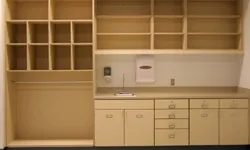
Maximize Vertical Storage with Modular Systems
Wire shelving in the closet is just the tip of the iceberg. Modular storage works because it gives you prefabricated convenience with custom flexibility. Install it carefully and it fits your weird habits perfectly. Need a safe spot for a hat collection before Easter? Done. Want to park a 50-pound bag of dog food off the cold concrete? Easy.
These systems aren’t limited to hallways. They thrive in garages, attics, laundry rooms, and home offices. You can mount them to walls. Hang them from ceilings. Hook them over doors. It’s an economical way to turn dead vertical space into usable square footage.
5: Plant a Vertical Garden
Stop cluttering your windowsills. If you like plants, go up. A vertical garden uses less real estate while keeping things lush. You can buy small hydroponic setups that stack into a wall-mounted column. Get edible herbs and veggies ready for a stir-fry without a backyard.
No money for hydroponics? Just tack hooks into the wall. Train ivy or pothos (Epipremnum aureum ) along them. Hanging baskets work too. Houseplants add designer ambience for bargain prices. They also filter air impurities. That’s practical, not just pretty.
On a small patio or deck, a vertical vegetable garden produces impressive yields with minimal work.
Did You Know?
If you’ve killed more plants than you care to admit, it’s probably not your fault. Most people just pick the wrong varieties. Find plants that love your specific indoor environment and they’ll thrive.
4: Embrace Open Shelving
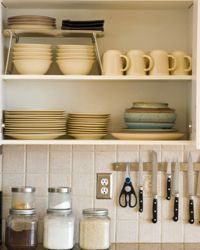

Display What Matters Most
You’ve got good china. You bought it to use, not to hide in a dark cupboard where it gathers dust. Open shelving flips the script. It turns functional objects into a curated display. Suddenly, those serving bowls aren’t just storage; they are decor.
It’s about hiding things in plain sight.
Start by looking at your clutter differently. That pile of yarn? A stack of matchbooks? They aren’t trash. They are raw material for a visual collage. Open shelves force you to make choices. If an item is too ugly, too small, or just too many, it doesn’t belong on the shelf. It goes into a decorative box or a woven basket.
Floating shelves work everywhere. Try one over a window. Or above a door. Even in the bathroom, where space is tight, vertical lines can organize without taking up floor space. You’ll start noticing color palettes and textures you ignored before. Arranging and rearranging becomes a game of balance.
Elevate Your Art
Most people hang art at eye level. It’s safe. It’s normal. But normal is boring.
What if you hung a painting near the ceiling? Or suspended it from above? Art surprises us. It demands attention. When you place a piece high up, or lean it against a floating shelf, you change the perspective. You force the viewer to look up. To look closer.
Don’t worry about having enough wall space. If you have more art than walls, go vertical. Hang framed stained glass over a rarely used window. Line up coordinating prints horizontally above a tall headboard. Even mounting pieces below waist height can create a striking, unconventional focal point.
You don’t need to spend a fortune to make a statement. Rugs, quilts, plates, and stretched fabric can all become attractive, low-cost wall art.
Bare walls feel empty. Give yours some character. Let your collection tell a story.
Trick the Eye With Scale
High ceilings are elegant. They also feel cold. Unwelcoming. Like a cathedral you’re not supposed to touch.
If you have too much vertical airiness, you need to bring the room down to earth. Paint the ceiling a darker color than the walls. It shrinks the visual height. It creates intimacy.
Avoid strong vertical lines. Skip the floor-to-ceiling curtains. Resist the urge to use vertical wallpaper patterns. Instead, think horizontal.
Add a chair rail. Use shorter window treatments. Create horizontal influences with shelving and grouped wall art. These elements break up the vertical expanse. They make the space feel cozier. More lived-in.
Rethink How You Light It
Lighting defines vertical space. Poor lighting makes high ceilings loom. Smart lighting brings them down.
Forget tabletop task lights that cast gloomy shadows on the lower walls. Use track lighting. It’s flexible. It’s functional. It updates the look of any room—playrooms, family rooms, craft spaces.
Modern track lights don’t look like industrial tin cans. You can even find plug-in fixtures that don’t require an electrician. Just snap them into existing outlets. Instant upgrade.
Need a quick fix for a cramped feeling? Swap a table lamp for a floor lamp. The taller light redistributes illumination upward. You gain table space and lose the bulky feel.
Small Spaces, Big Ideas
Vertical space isn’t just for big rooms. It’s essential for small ones.
In a tiny bathroom, every inch counts. Install wall-mounted shelves above the toilet. Use vertical cabinets. Over-the-door organizers keep clutter off the floor. The result is a room that feels larger because it’s uncluttered.
Plants don’t need to sit on the floor. Use vertical planters. Create a living wall with hanging pots and shelves. It adds life without consuming square footage.
The goal isn’t just storage. It’s atmosphere. It’s making the space work for you. Whether you’re dealing with a cavernous living room or a closet-sized bathroom, the solution is often up. Look up. See what’s there. Then decide what belongs on the shelf.
It’s messy. It’s creative. And it’s entirely yours.


