


Most homeowners assume the secret to vibrant laundry is expensive detergent. It isn’t. It’s chemistry avoidance.
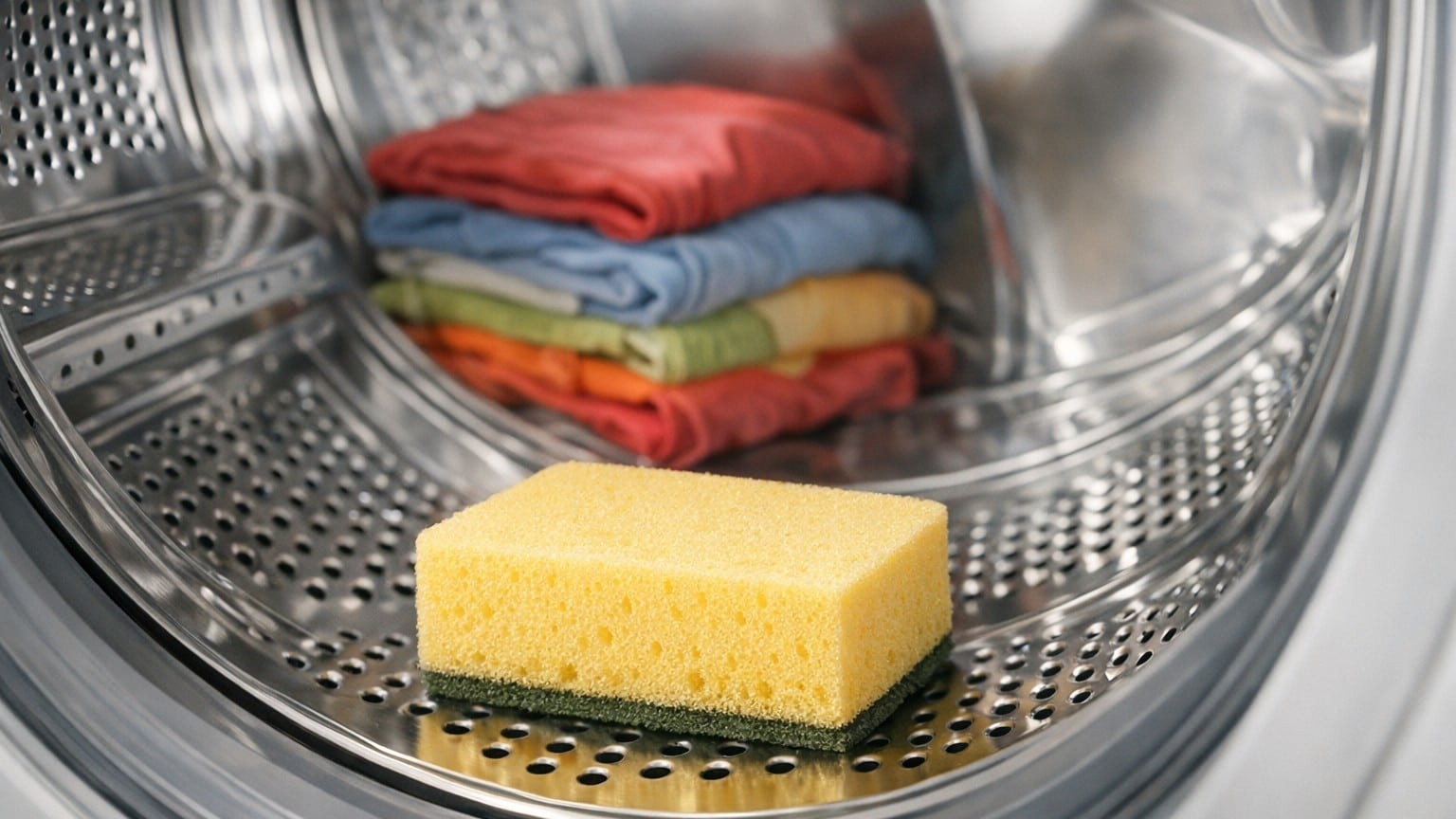
A standard household sponge costs less than a euro. Drop it into your washing machine drum, either alone or as a supplement to less liquid fabric softener, and you replicate a trick professional dry cleaners have used for decades. When your colored clothes emerge from the cycle with their hues still sharp after dozens of washes, that isn’t luck. It’s the result of a specific mechanical intervention.
Why Liquid Detergent Fades Your Clothes
Laundry detergent is a complex cocktail. It can contain up to 25 different molecules. You have surfactants for stain removal, enzymes, bleach agents, preservatives, perfumes, and dyes. This mix is deadly against grease. Against dyed fibers, it is a slow killer.
Optical brighteners are the main culprit. They do not actually make clothes cleaner. They are chemical compounds designed to deposit on fibers, absorb ultraviolet rays, and re-emit blue light. This creates an optical illusion that makes fabrics appear whiter and brighter than they are. On white shirts, this works. On colored garments, it creates the opposite effect. The deposit acts like a veil, causing colors to dull progressively with every cycle.
In a professional laundry setting, this is visible. White fabrics turn yellow. Colors fade. Towels lose absorbency. Most families miss these subtle shifts until the damage is done.
Liquid detergent is often recommended for dark colors or low-temperature washes (30-40°C) because it dissolves quickly and rinses easily. It limits residue on dark textiles and helps preserve deep blacks. But it only works if you don’t overdose. A late-2025 study by UFC-Que Choisir revealed that 67% of consumers use too much detergent. This increases the real cost per wash by 30-50%. The excess product remains suspended in the fibers, coating them and accelerating the fading process.
The Sponge Mechanism Explained
Placing a sponge in the drum acts like a magnet. It captures lint, pet hair, and debris that cling to your clothes. This is the visible function. The professional explanation goes deeper.
When fibers lose color in the machine, the detergent is not always the primary villain. The real problem is the repeated friction of suspended particles against the fabric surface. During the wash cycle, the sponge uses its porous, slightly abrasive texture to act as a collector. It traps and retains fibers detached by friction and movement.
By capturing these micro-debris suspended in the water, the sponge reduces the invisible “sandpaper” effect that erodes dyes with every rotation of the drum.
The sponge cuts the spiral of abrasion. Fewer particles mean less friction, which means less color erosion.
Textile fibers have a natural tendency to hold onto lint. Lint clings more tightly when wet and mixed with detergent. The more particles suspended in the water, the more friction accumulates. The sponge interrupts this cycle.
There is a secondary benefit for your appliance. Less debris circulating freely means the filter clogs less often and the pump works less hard. Field data suggests that nearly one in five households with pets sees accelerated wear on their washing machine due to unfiltered, invisible debris. The sponge protects the machine as much as the clothes.
The 1-Euro Method: Execution and Precautions
This simple gesture redefines daily laundry. Manufacturers push endless technological innovations, yet the problems of lint, hair, and costly breakdowns persist. A basic sponge from a store like Action fits this role perfectly.
The method is straightforward, but details matter.
- Select the right sponge. Choose a new domestic sponge. Ensure it does not have a hard abrasive side. You want the soft, porous texture only.
- Load the drum. Place the sponge in with your laundry. Run your usual program.
- Clean and dry. After every wash, remove the sponge. Extract the captured debris. Rinse it thoroughly. Let it air dry completely before the next use.
Two precautions are necessary. First, avoid using harsh chemical cleaners or highly concentrated fabric softeners with the sponge. These can degrade the material or leave residues on your clothes. Second, avoid very high-temperature wash cycles when using the sponge. Extreme heat can damage its structure.
Do not overload the drum. If the machine is too full, friction increases. This suspends more lint into the water, canceling out the sponge’s effect. The rotation needs space. The sponge needs room to move and capture debris effectively.
The winning combination is simple: one-third empty drum space. A clean sponge. A wash program set to 30 or 40°C. This is the mechanical routine that preserves color intensity over the long term.
It is not magic. It is physics. And it costs almost nothing. But you have to start doing it.
Why Your Laundry Bill Is Bleeding You Dry
Let’s do the math. The average French household runs 220 loads a year. That’s it. 220 times a week you’re feeding the beast. You’re using about 26 liters of liquid detergent or 40 kilos of powder annually. The cost per cycle varies wildly depending on where you shop. Big supermarket brands? You’re looking at roughly €0.15 per wash. Store brands? €0.20 to €0.25. National brands? They can hit €0.40 a load. Do the addition. Even on the cheapest stuff, you’re spending between €33 and €88 a year just for the soap. And that’s before you factor in the systematic overdosing that happens in almost every household. You’re throwing money into the drain. Literally.
This isn’t about stripping your routine to nothing. It’s about efficiency. Using a sponge doesn’t mean you stop using detergent entirely. If you’re dealing with jeans caked in mud or work uniforms stained with grease, you still need the chemicals. The sponge isn’t a magic wand for heavy soil. It doesn’t replace cleaning your machine’s filter or scrubbing out the drum either. Those tasks are non-negotiable for keeping the machine from seizing up. But for everyday wear? The rules change.
The Physics of Fiber Protection
When you reduce the chemical load and let the sponge handle the mechanical agitation, something interesting happens. You aren’t just saving money. You’re saving fabric. Chemical bleaching agents are notorious for degrading fibers over time. They eat away at the structural integrity of the cotton or polyester. On colored clothing, this shows up as dullness. Fading. The grayish haze that makes your favorite blue shirt look like it’s been through a war zone.
Reduce the detergent. Increase the mechanical action of the sponge. It lifts surface dirt and lint without the harsh chemical assault. Your clothes stay vibrant longer. The environment gets a break from the runoff. And your wallet stops shrinking. It’s a trade-off that actually makes sense.
The Invisible Shield: Inside-Out Strategy
There is one specific trick that most people ignore until their clothes are already ruined. Turn your pants inside out before tossing them in the wash. Seriously. This single habit reduces friction on the outer surface of the fabric. The colored side takes the beating instead of the visible side.
Combine this with the sponge method. You’re limiting the contact points between the dye and the abrasive cycle of the drum. Two euros for a decent sponge. A zero-cost habit change. Compare that to having to replace your wardrobe every few years because your knits have turned gray or your darks have washed out to a pale, lifeless shade. It’s not just about cutting costs. It’s about extending the life of what you already own. The machine will still churn. The water will still swirl. But the damage? That’s largely in your control.


