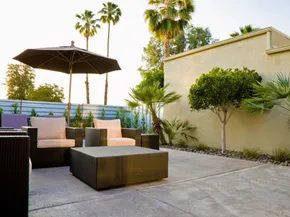
Stop treating your backyard like an afterthought. It is an extension of your living room. The data backs this up. The American Institute of Architects noted in 2008 that over two-thirds of respondents valued outdoor living spaces. They wanted to blur the line between inside and out. You can start there. A patio works. It defines the yard. It creates a zone for grilling in July or sitting by a fire pit in November. It is not just concrete and dust. It is a multi-season recreation center. But the first step is choosing the right materials. You need to decide if you want a space for a dozen guests or a quiet corner for two. The look matters too. A colonial house might scream for brick. A modern home might demand poured concrete. Let’s look at the five most common patio materials. We will start with the heaviest option.
Stone Patios: Natural Durability vs. Cost
Stone is the premium choice. It is natural. It is durable. Liz Birkholz, former vice-president elect for communications at the American Society of Landscape Architects, suggests using local stone. Why? It is environmentally friendlier. It blends into your specific backyard setting better than imported rock. Common varieties include slate. Quartzite works well too. Bluestone and limestone are standard choices [sources: Outdoor Living].
Thomas Tavella, president of Tavella Design Group, argues that natural stone outlasts other materials. “It will definitely last longer and hold its color longer than any of the other materials,” he says. The hues match the garden. They age gracefully.
But there are downsides. The surface is irregular. Walking on it can be rough. Your shoes might catch. The stones are heavy. Lifting them requires muscle or machinery. The irregular shapes make cutting and fitting difficult. You will waste time adjusting pieces. Cost is the biggest barrier. Stone patios are usually more expensive than concrete pavers or poured concrete. You pay for the beauty and the labor.
Concrete Pavers: Flexibility and Maintenance
Concrete pavers offer a cheaper alternative. They are dense concrete compacted into individual units. They mimic brick or natural stone. The price is lower. The variety is high. You can choose colors and shapes.
Installation methods matter. Most pavers are laid as individual units. This means if one cracks, you can replace just that piece. You do not need to tear up the whole patio. Some pavers have interlocking joints. These aid stability. They are less likely to shift out of place. When set in sand, the pavers have some give. They can withstand temperature changes. They shift instead of cracking under load.
There are trade-offs. The geometric shapes limit your pattern options. You cannot do free-form designs easily. Some pavers have shallow pigments. These can fade over time. Scratches reveal the bare concrete underneath. It looks worn quickly.
Permeable Pavers for Eco-Conscious Homeowners
Want to be green-minded? Try permeable concrete pavers. The installation is different. The pavers sit with spaces between them. These spaces are filled with small stones. Rainwater filters through. It seeps back into the soil slowly. It does not run off the pavement. It does not pick up pollutants from lawns and carry them to rivers [sources: Permeable Paver Systems]. It is a smarter way to handle water runoff.
Poured Concrete: Versatility and Risk
Concrete is cement, sand, gravel, and water. Mix it up and it is gooey. Let it dry and it is hard. The semi-liquid nature allows for any shape. Geometric. Curved. It fits almost any yard. It is economical. It offers a hard, flat surface. Maintenance is low.
The drawbacks are significant. Mixing is tricky. You must follow exact specifications. If you mess up the ratio, the result is weak. Drying must be controlled. If drainage is poor, cracks will form. Smooth concrete gets slippery when wet. That is a safety hazard. Birkholz notes another issue. Do not pour concrete over sewer or electrical lines. If those lines need repair, you will have to break the patio. That costs more than the initial install. Finally, concrete can feel industrial. It can feel stark. It might not fit a natural, garden-heavy aesthetic.
Creative Concrete Treatments
You do not have to accept plain gray. Try patterned or tinted concrete. Stamp it. Color it. It can look like bricks. Or pavers. Or stone. It adds dimension. It costs more than plain poured concrete. Usually, it costs less than actual pavers. It is a middle-ground solution for style and budget.
Tile: The Next Option
We have covered stone. We have covered concrete. Now let’s look at tile.

Why Porcelain and Ceramic Require Specific Grade Selections
You might look at a glossy ceramic tile and see a bathroom floor. Look closer. That same tile, if installed incorrectly, will crack your patio in January. The key isn’t just aesthetics. It’s physics. Water absorption.
Exterior tiles must be dense. Unglazed is usually the safer bet for walking surfaces. Glazed tiles get slick when wet. You don’t want that on a deck or patio. You want traction.
Porcelain falls under the ceramic umbrella but is fired at higher temperatures. This makes it less porous. Less porous means less water gets inside. Less water inside means less expansion. Less expansion means fewer cracks when the temperature drops. If you live in a freeze-thaw cycle, ignore this and your patio becomes a trip hazard. And a repair nightmare.
The Hidden Costs of Tile Patios
Tile offers a seamless indoor-outdoor flow. It looks distinct. It feels premium. But it comes with baggage.
First, cost. Tile generally costs more than brick. Sometimes more than natural stone. You are paying for the material and the labor of a precise installation.
Second, safety. Tile can be slippery. Especially near pools or spas. If water sits on the surface, algae grows. Algae grows on smooth, glazed surfaces. You end up with a biological hazard. Not fun.
Third, maintenance. If the grout fails, water gets under the tile. The tile pops. Loose tiles are dangerous. They trip people. They ruin shoes.
Brick: A Material With History and Temperament
Brick has been used in construction for centuries. It’s reliable. It’s sturdy. But patio brick is not wall brick.
Wall brick is soft. It absorbs water. It crumbles in winter. Patio brick is specially fired. It is denser. It resists moisture. If you buy standard red brick from a hardware store, it might not survive a winter. Check the grade. Look for “freeze-thaw resistant.” This is non-negotiable in cold climates.
Designing With Brick: Beyond the Red Box
Everyone thinks of red brick. Square. Uniform. Boring. It doesn’t have to be that way.
Brick comes in tan. Black. Brown. Mixed hues. You can blend them. Or stick to one color for a cleaner look.
The real art is in the pattern. The layout matters.
Herringbone is a classic. Bricks are placed at a 90-degree angle to each other. It creates a zigzag effect. It locks the bricks together. This makes the patio structurally stronger. It also looks dynamic.
Pinwheel pattern involves four full bricks around a central half-brick. It creates a square-within-a-square motif. It adds visual interest. It breaks up the monotony of a long, straight run.
The Downsides of Brick Installation
Brick isn’t perfect. It has quirks.
If you install brick on sand (dry-laid), weeds will grow. They will grow in the joints. This can be annoying. It can also be beautiful. Plant creepers in the gaps. Soften the hard lines. It’s a choice.
If you mortar the bricks, it’s permanent. Harder to fix. But more stable.
Unevenness is a risk. If the base isn’t prepared correctly, bricks settle. They shift. You end up with a bumpy surface. Concrete pavers are more uniform. Brick is more forgiving but requires a better base.
Brick is usually more expensive than concrete pavers. You pay for the labor. You pay for the material. But you get a timeless look. Brick ages well. It gains character. Concrete cracks. Brick just gets older.
Making Your Choice
Whether you choose tile, brick, or stone, you are adding square footage to your home. This is outdoor living space. It’s for entertaining. For relaxing. For eating dinner under the stars.
The material matters. The installation matters more.
Tile offers elegance. Brick offers warmth. Both require preparation. Both require the right materials. Don’t cut corners. The cost of fixing a failed patio is higher than the cost of doing it right