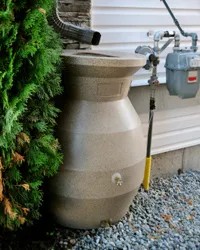
You have the barrel. You have the water. But can you actually drink it? No.
Don’t make that mistake.
Rainwater looks clear. It smells neutral. It is not safe for human consumption unless you filter and treat it heavily. And even then, why risk it?
That water rolling off your roof is a pickup for debris. You have particulates from car exhaust. You have smokestack residue. You have bird droppings. Dead bugs break down in the gutter screen. It is not pristine.
But your plants don’t care about pollution.
They love this water. It is free. It is soft. It is perfect for soaking lawns, flowerbeds, and vegetable gardens. You can hose down siding. You can blast the driveway. You can wash the car without leaving those hard water spots.
Watering Vegetables Correctly
There is a right way and a wrong way to use rainwater on food crops.
If you spray it on leafy greens like lettuce or basil, you are spraying contaminants directly onto the part you eat. Don’t do that.
Keep the flow low. Aim at the ground. Let the water soak into the soil around the roots. This delivers moisture without contaminating the edible parts.
Timing matters. Do not use rainwater within a couple of days of harvesting. If you must water close to harvest time, wash the produce thoroughly with tap water before eating. That tap water is treated. It is safe.
Maintaining Your Setup
A neglected rain barrel becomes a breeding ground.
Keep the lid on. Always. Sunlight and open air trigger algae growth. Algae clogs filters and looks gross.
Check the screen. Mosquitoes love standing water. A loose mesh lets them in. A tight seal keeps them out.
Clean the filter regularly. Follow the manufacturer’s instructions. If you skip this, you lose the benefits.
Inspect for leaks. Water damage is expensive. Fix it early.
Keep gutters clean. If debris blocks the downspout, water won’t reach the barrel. It will overflow. It will pool. That is bad for your foundation.
Winter Preparation
If you live where temperatures drop below freezing, move the barrel.
Water expands when it freezes. A plastic barrel can crack. A concrete one can split. Repairing a cracked barrel is annoying. Replacing it is worse.
Drain it completely. Store it upside down or in a garage.
You may need to modify your downspout. If the barrel is gone in winter, the water has to go somewhere. Extend the downspout away from the house. Ensure water flows freely. Don’t let it sit near the foundation.
Potable vs. Non-Potable Water
The distinction is simple.
Potable water is safe to drink. Municipal systems treat it with chlorine. They kill bacteria. They remove pathogens.
Non-potable water is not.
Rainwater falls into this category. So does graywater from sinks or showers in some regions. It is fine for toilets. It is fine for gardens. It is fine for washing cars.
It is not for cooking.
It is not for drinking.
Your body is not a filter. Don’t test it. Use the rain barrel for what it was designed for. Keep the food on the table safe with treated water. Keep the garden green with free rain.