Stop thinking of rusty tin sheds. Modern metal roofing has evolved far beyond dilapidated lean-tos and corrugated sheets. If you are weighing your options for a new roof, you are likely looking at asphalt/fiberglass shingles or maybe wood. Some flat roofs use tar, and rubber is gaining traction as a low-maintenance fix. But if “green” living and minimal upkeep are your goals, trends are shifting. Metal is rising. It costs more upfront and usually demands a pro’s touch, but the longevity justifies the price for many homeowners.
Aluminum and steel dominate the market. Copper is an option if you have the budget. And no, you won’t be stuck with industrial looks. Today’s metal panels can mimic everything from Spanish clay tiles to natural slate.
Why switch? Fire resistance. They are lightweight. They reflect sunlight, which drops summer cooling bills. Installation is faster than traditional methods. There is a catch though. Repairs are harder. If you need to modify or fix a metal roof, it is more difficult than patching asphalt shingles.
In this first part of our guide, we break down the five primary metal types and the underlayment that protects your home’s structure.
Metal Roofing Materials: Five Key Options
Your roof won’t be corrugated tin. Here are the five basic metals, ranked by longevity and price.
Steel
Steel is the workhorse. It is sturdy and common. Manufacturers protect it from rust using a zinc coating, a sealant, and heavy-duty paint. It is the most popular choice for a reason.
Stainless Steel
Stainless steel does not need extra coatings. Its anti-corroding properties are built-in. That makes it expensive. If the cold, clinical look bothers you, there are coatings available to make it look more natural.
Aluminum
Aluminum is lightweight and rust-proof. Like stainless steel, it benefits from coatings for a natural appearance. It is the most popular residential metal roofing option. Some worry about using this finite natural resource for roofing when other materials could suffice, but the performance is hard to beat.
Copper
Copper is gaining popularity, especially as an accent. Do not expect it to stay shiny. It weathers to a green patina over time. You see this on older buildings. It is striking, whether new (reddish-gold) or oxidized (blue-green). It is also very expensive.
Alloys
Various metal alloys can be used. You choose based on strength or lifespan needs. Formulations vary. Cost depends on the specific mix. These can be pricey, but they offer tailored performance.
A Real Lifetime Guarantee
Ready for a roof to outlive you? Metal is your answer. Standard shingle roofs last 12 to 17 years. A metal roof lasts more than 50. Copper or aluminum? Be prepared for septuagenarian status. These roofs can last more than 75 years.
Roofing Underlayment Materials
Seams exist in every roof. Traditional shingles have plenty of them. You need a barrier between the roofing material and your house. That is where underlayment comes in.
It used to be simple. Asphalt-saturated building paper acted as the weather barrier. Today, you have options. Rubberized asphalt. Organic materials. Fiberglass. Synthetic. The right choice keeps moisture, cold, and stifling summer air out. This extends the roof’s life.
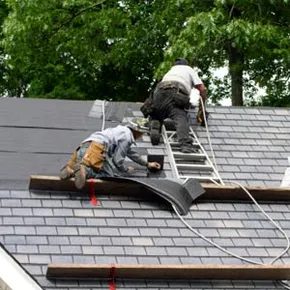
Many modern underlayments include anti-slip technology to protect installers. They can be exposed for up to six months during construction. If going green is your goal, choose organic or synthetic underlayments. They can help your home achieve Leadership in Energy and Environmental Design (LEED) certification.
Whatever matters most, materials range from organic underlayments to classy copper roofs. A roof can have personality.
Getting the Job Done: The Synthetic Advantage
Synthetic roof underlayments have pulled their weight lately. Think post-Katrina New Orleans. Contractors used synthetic underlayments as temporary solutions. Many types can be exposed for up to six months.
These held up better than FEMA’s tarps. They became part of the houses as they were repaired. Plastic tarps have to be removed and trashed. Synthetic underlayments stay. They work.
For more details on installation and safety, keep reading.
Digging Deeper Into the Mechanics
You want to know how the stuff actually holds up against the elements? Let’s start with the foundation. Concrete isn’t just poured mud. It’s a chemical reaction waiting to happen. The mixing of cement, water, and aggregate creates a slurry that hardens into stone over time. If you’re looking at a concrete roof, you’re looking at a continuous membrane. No seams to leak. No joints to fail. That’s the appeal.
But what about the light?
Skylights don’t just punch a hole in your house. They are engineered optical devices. Glass, acrylic, or polycarbonate? The material choice changes everything. UV protection, insulation values, and impact resistance vary wildly between them. And daylighting devices? Those are the unsung heroes. They pull light from the north sky and scatter it deep into the interior. No electrical bill. No bulbs to burn out. Just pure, diffused illumination.
The Tile Factor
Ceramic tile tells a different story. It’s baked. Clay, water, and heat. The firing process vitrifies the surface. Make it waterproof. Make it hard. If you’re laying floor or wall tile, the substrate matters as much as the tile itself. A flexible membrane under thin-set mortar prevents cracking. Watch the expansion joints. Concrete moves. Wood moves. Tile doesn’t. If you don’t give it room to breathe, it will crack.
The Underlayment Debate
Here is where most DIYers cut corners. They look at the shingles. They don’t look at what’s underneath. Synthetic underlayment has changed the game. Old-school felt paper absorbs water. It gets heavy. It tears easily during installation. Synthetic stuff? It’s lighter. More resistant to UV degradation if left exposed for a few weeks. It slides easier under heavy rolls.
“Synthetic underlayment offers better tear resistance and UV stability than traditional asphalt-saturated felt.”
If you’re installing metal roofing, the underlayment is your first line of defense against condensation. Metal expands and contracts. Thermal movement can break seals. A high-quality synthetic layer bridges those gaps. It’s breathable. It lets moisture escape from the attic side while keeping rain out.
Metal Roofing Nuances
Metal roofing is long-lasting. Properly installed, it lasts decades. But the installation is precise. You need the right tools. A standing seam clamp. A metal snip. A drill with a clutch set to prevent stripping screws. Don’t over-drive the fasteners. Crush the rubber washer. You’ve just created a leak.
The panels need to overlap correctly. Side laps and end laps must be sealed. Sealant isn’t a fix for bad installation. It’s a backup. If you’re in a high-wind area, check the local codes. Some regions require specific clip systems. New England Metal Roof contractors often emphasize these structural details because snow loads are real.
Buying Guides and Specs
When you go to buy materials, don’t just look at price. Look at specs.
- Gauge : Thinner is cheaper but more prone to oil-canning (those wavy lines you see on cheap metal roofs).
-
Coating : Kynar 500 or Hylar 500 finishes hold color longer. Cheap paint fades in five years.