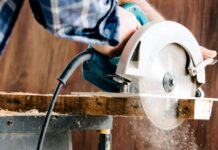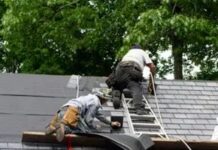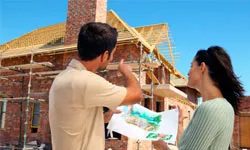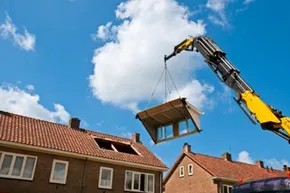
That 6 a.m. jackhammer isn’t just annoying. It’s a symptom of traditional site-built construction. If your new neighbors had chosen a prefabricated home, you’d likely still be asleep. Instead of weeks of sawing, hammering, and concrete pouring, a prefab structure can often be assembled in mere days.
Prefabricated homes (or prefab) are manufactured partially or fully in a factory. Think of them as high-end dollhouses, scaled up to human size. Factories build components like kitchens, roofs, and entire wall sections using standardized sizes. These pieces are then transported to your lot and assembled. You get the same end result as a stick-built house, but the heavy lifting happens off-site.
How prefab compares to conventional site-building
You might assume prefab is a modern trend. It isn’t. The concept dates back to the 17th century, but it gained real traction in the early 1900s. The Aladdin Company started selling house kits, essentially boxes of parts and instructions for homeowners to build their own dwellings. It was a frugal, enterprising approach to housing.
Today, the adoption rates vary wildly by country. In the United States, prefab is a niche market. As of 2011, there were approximately 46,000 prefabricated homes compared to about 130.5 million conventional, architect-designed homes. That puts prefab at roughly 0.03 percent of the U.S. housing stock.
Look at Sweden, and the numbers flip. By 2008, 70 percent of housing in Sweden was prefabricated. It makes sense. If you like the clean lines and DIY spirit of IKEA furniture, you’re already comfortable with the idea of assembling flat-packed goods into a functional object. IKEA even has a home line called BoKlok.
Why you might consider a prefab build
The primary draw? Cost. Prefab homes are generally less expensive than conventional site-built options. The factory environment allows for material efficiency and reduced labor waste. You’re not paying for months of on-site weather delays or complex carpentry from scratch.
But there are trade-offs. You are working with standard sizes. Customization has limits compared to a fully custom architect-designed home. The assembly process is fast, but it requires a clear site and careful planning. If you’re used to building a house like you build a deck, the scale of putting together an entire living space might feel daunting. It is. But the speed and cost savings are hard to ignore.
The main advantage isn’t just speed. It’s the reduction of on-site chaos. No three-month construction zone next to your bedroom window.
For a homeowner considering a DIY approach or just a faster timeline, prefab offers a distinct path. You skip the long tail of site work. You get a structured, pre-built system that arrives ready to be connected. The rest of this process involves site prep, utility connections, and finishing touches, but the core structure is already done.
How prefab construction costs stack up against a traditional custom build
You’ve seen it. That glossy spread in the newspaper. The dream of designing every square inch of your living space. It’s intoxicating, and in the U.S., it’s baked into the idea of what “making it” looks like.
But the price tag and the headaches are real.
Traditional custom homes involve a chaotic mix of architects, contractors, and skilled laborers. Because the work happens outdoors on your specific lot, the schedule is hostage to the weather. Rain, wind, or freezing temperatures can stall progress for months. Add in the red tape, especially in large cities with strict zoning laws, and you’re looking at a mountain of unanticipated fees.
Prefab homes change the equation. By moving the work into a factory, you eliminate weather delays. Production becomes efficient. Turnaround times drop.
The numbers back this up. As of early 2012, traditional custom homes ran about $300 per square foot. Prefab units? Roughly $150 to $200 per square foot (or per 0.09 square meters). That is a 45 to 50 percent savings. You are paying less for the same footprint.
And the “cheap” reputation? It’s fading. Modern prefab companies aren’t churning out boxy, institutional-looking boxes. They are designing for customization, luxury, and environmental friendliness. The aesthetic gap has closed, or at least narrowed enough to matter.
Why you can’t just DIY your prefab home assembly
Here is the part that surprises people. You can’t just buy a prefab kit, haul it to the site, and start screwing things together on a weekend.
Prefab homes are not DIY projects. Not even close.
They require heavy equipment. Cranes. Skid steers. Professional crews. The modules are massive, heavy, and precise. You need permits for assembly, and you often have to rent that large equipment. Those fees are hefty.
Then there is shipping. Because the home is built in a factory miles away, getting it to your lot costs money. Depending on distance and complexity, shipping charges can range anywhere from $5,000 to $30,000.
So, yes, the structure itself is cheaper. But the logistics add back into the total cost. You are trading labor costs and weather delays for equipment rental and shipping fees.
The hidden costs of maintenance and local building codes
Prefab homes are designed to align with local building codes. This is a feature, not a bug. It means they meet safety and structural standards.
But it creates a logistical headache later.
Because these homes are built to specific specifications for specific regions, companies have a limited geographic footprint. They can’t easily do business everywhere. This matters when your home ages.
If you need a repair, you need materials designed and sized specifically for your home. You won’t find them at your local hardware store. You have to source them from the manufacturer. If the manufacturer goes out of business, or if the parts are discontinued, you are stuck. This is a long-term consideration that traditional wood-frame builders don’t face.
Is the prefab stigma still real?
Despite the efficiency, the cost savings, and the design improvements, prefab homes still carry a stigma.
Many contractors and consumers look down on factory-made homes. They consider them “beneath” traditional construction. It’s a perception issue, largely. But it persists.
The industry has made leaps. The technology is advanced. The designs are sleek. But the psychology of buying a “factory” home is different from buying a “home” built by hand on your lot.
The numbers say prefab makes sense. The industry is maturing. But the stigma lingers, and that affects buyer confidence and financing options.
The 2007 Recession and Construction Unemployment
The 2007 global recession didn’t just slow down the economy; it hammered specific sectors, and construction took the worst beating. A 2010 report from the U.S. Bureau of Labor Statistics projected a 19 percent growth in the industry through 2018. That optimism felt disconnected from reality by early 2012. Construction unemployment rates had doubled the national average. Experts worried that public sector hesitation to fund long-term infrastructure projects would keep these numbers stubbornly high. The labor market for site-built homes was bleeding, but that pain didn’t automatically flow into the prefab sector.
Prefab Sales Collapse During the Housing Crisis
You might assume cheaper housing options would see a spike during an economic downturn. They didn’t. People simply stopped buying homes entirely. The U.S. Census data tells a stark story of decline rather than shift. Placements of prefab homes fell from 112,400 in 2006 to 94,800 in 2007, right as the U.S. housing crisis began. The drop accelerated sharply in 2008, with only 80,500 units shipped. By 2011, the number had halved again to just 46,000.
Placements of prefab homes dropped from 112,400 in 2006 to 94,800 in 2007, during the beginning of the U.S. housing crisis.
The stigma remains. Despite the cost-effectiveness and the media buzz, largely driven by publications like Dwell Magazine, industry insiders don’t view prefab as a serious threat to traditional site-building. For the majority of home buyers, the desire to build a custom home on their own lot outweighs the financial logic of a factory-built alternative.
Niche Markets and the Green Appeal
Prefab isn’t dead, though. It has found a foothold in specific niches. Luxury prefab options are popping up across the United States, targeting buyers who want speed and precision rather than total aesthetic freedom. For the frugal homeowner, it remains a welcome alternative to the high costs of traditional framing and roofing.
The environmental angle is doing the heavy lifting here. Prefab housing creates significantly less waste than site-built construction. The controlled factory environment means materials are cut to exact specifications, minimizing off-cuts that would otherwise end up in a landfill. Many manufacturers also use recycled materials. This green profile attracts environmentally conscious builders nationwide.
Disaster Recovery and the Future
When disasters strike, prefab often comes to the rescue. In the American South, the devastation from Hurricane Katrina triggered a resurgence in prefab usage. The speed of deployment and the durability of factory-built units made them a practical solution for rebuilding.
Prefab homes aren’t killing the construction industry. But they are carving out a name for themselves. If the industry continues to push towards greener materials and higher-end finishes, it might finally win over the purists who prefer traditional methods. The gap is closing, even if the market hasn’t exploded.