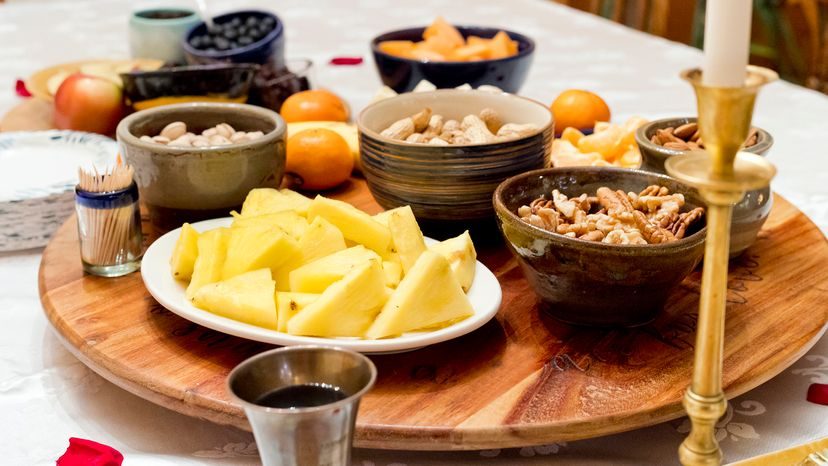
If you own a corner cabinet, you likely have a circular turntable hiding in the shadows. You might also see one sitting in the middle of a dining table or spinning at a bistro. But what is a Lazy Susan beyond its basic function? And why is it named after a trait most of us try to avoid in our daily lives?
We rarely name household items with human names. Your salt shaker isn’t “Shaky Sam.” Your whisk isn’t “Whisker Wanda.” Yet, this spinning tray carries a name that suggests indolence. It’s the most confusing label in the kitchen arsenal.
This piece reclaims the dignity of the Lazy Susan. We will explore why this tool is essential for organization and dining. We will also trace the murky, debated origins of a name that has annoyed users for over a century.
How a Lazy Susan Works
The mechanism is brutally simple. It is a baseplate and a rotating top plate. Gravity and friction do the heavy lifting. You place heavy items near the center to keep it stable. Lighter items go on the outer rim.
Spin it clockwise. Reach for the dish that was previously out of arm’s length. No need to stand up. No need to stretch across the table and knock over the water pitcher.
This is where the device earns its keep. It turns a static surface into a dynamic zone.
The Lazy Susan transforms a corner cabinet from a black hole into a functional storage space.
In a kitchen cabinet, the corner is a dead zone. Shelves end abruptly. You can’t reach the back corner without digging through everything in front of it. A Lazy Susan rotates the entire contents of that shelf.
You pull out the jar of pasta you need from the back. The shelf spins. The item moves to the front. You put it back. Done.
Why Is It Called a Lazy Susan?
The name suggests laziness. But the history is far more complex. It’s not about being lazy. It’s about social etiquette.
There are three main theories. None are confirmed. All are plausible.
Theory One: The White House Connection
Some historians point to a White House dinner in the late 19th century. A guest asked for a dish. The server didn’t have the range to reach it. The dish was on a rotating tray. The guest supposedly said, “Pass it around, Susan.” Or perhaps the server was named Susan. Or maybe the tray was named Susan. The story gets fuzzy.
This theory has a problem. The term appeared in print before the White House incident. But the anecdote persists. It makes for a good story.
Theory Two: The Victorian Euphemism
This is the darker theory. In the late 1800s, “Susan” was slang for a prostitute. A “lazy Susan” would then be a euphemism for a woman who was available but not actively working. It’s a stretch. But Victorian slang was weird. The term “Mary” was also used for prostitutes.
This theory feels cynical. It also feels possible. The name is disparaging. Why would anyone name a dining tool after a slur? Unless they were making a joke. A dark, Victorian joke.
**Theory Three: The
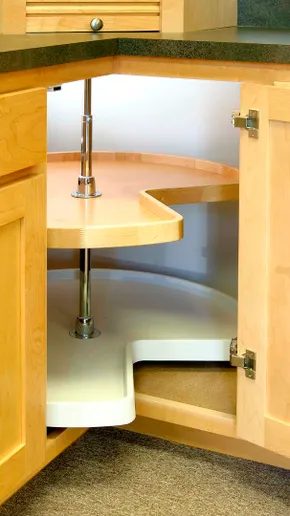
The mechanism is deceptively simple. A lazy Susan is essentially a round disc spinning on bearings hidden beneath the surface. You can build one from wood, plastic, glass, or even marble. If you buy one off the shelf, you will likely find diameters in even increments, mostly between 12 and 48 inches (30 to 122 centimeters).
Small versions, typically around 12 to 22 inches wide, are kitchen workhorses. They hold condiments and silverware. This keeps counters clear. It puts salt and pepper within arm’s reach of diners without forcing them to lean across the table.
Larger lazy susans, at least 22 inches (56 centimeters) in diameter, serve a different purpose. They sit in the center of dining tables. Dishes of food rotate on them. Each person reaches in, grabs what they want, and pulls back.
Why Is It Called a Lazy Susan?
The name is surprisingly vague. Most food historians agree it originated in the late 19th century. The term “Susan” was a common slang for a woman during that era. But who is the lazy Susan?
Some theories suggest the name comes from the difficulty of serving food at long dining tables before these rotating trays existed. Guests had to pass dishes down the line. It was tedious. It was inefficient. A rotating tray solved that problem.
Others argue the name is purely whimsical. The device allows lazy people to get their food without standing up or reaching far. Hence, the “lazy” label.
There is no official patent or documented inventor. The name just stuck. It became standard terminology in English-speaking households by the early 20th century. The etymology remains debated. What matters is the function. The rotating tray works. It saves space. It reduces clutter. It makes dining easier.
Whether you call it a turntable, a carousel tray, or a lazy Susan, the mechanics are the same. Bearings allow smooth rotation. The material determines durability and style. Wood offers warmth. Glass feels modern. Plastic is cheap and unbreakable.
When installing one, measure your table carefully. A 22-inch tray needs clearance. It cannot touch the edge of the table. It needs room to spin. If it gets stuck, the whole point is lost.
The name origin doesn’t change how you use it. It just adds a layer of history to a simple mechanical aid. You might be interested in how these trays fit into modern kitchen design. Do they replace drawer organizers? Do they enhance traditional dining rooms? The answer depends on your space.
Most homeowners use them for specific zones. The kitchen counter. The dining table. Occasionally, a bathroom vanity for toiletries. The application varies. The core principle remains constant. Rotate to access.

The Historical Roots of the Lazy Susan Name
The exact origin of the name “Lazy Susan” is murky, but one theory ties it directly to 18th-century labor dynamics. Back then, “Susan” wasn’t a specific person. It was a generic placeholder for a female servant. Employers used the term loosely, often hinting at the frequent complaints about worker laziness.
Markus Krajewski, a professor of media history at the University of Basel, Switzerland, explores this in his book The Server: A Media History from the Present to the Baroque. He told Architectural Digest that “Lazy Susan” likely emerged from this cultural context. It was a nod to a common grievance against household help.
How Technology Replaced Domestic Labor
The name stuck, but the reason for the device’s popularity shifted by the early 20th century. In the twenty years before World War I, technology started doing the heavy lifting. The ringer washing machine and similar inventions reduced the need for manual household labor.
Hiring servants became too expensive for many families. They needed a practical solution for serving food without calling for help. Rotating wooden trays appeared in kitchens and dining rooms. They replaced the need for a maid to run back and forth to the kitchen.
The term “Lazy Susan” became a mashup. It referenced the “lazy” employee of the past and the new technology that substituted for human power.
Other Theories Behind the Name of Rotating Trays

The story of who actually invented the Lazy Susan is messy. Most experts agree there was no single creator or namesake. You will see two major legends floating around. One links the device to Thomas Jefferson in the 18th century. The theory claims he named it after his daughter Susan. She reportedly hated being served last at dinner. The turning tray solved her problem.
The story falls apart quickly. Jefferson did not have a daughter named Susan. Another theory points to Thomas Edison. Some believe his phonograph turntable evolved into the kitchen lazy Susan. Neither story holds up to strict scrutiny.
The name likely arrived via marketing. A 1917 Vanity Fair advertisement cemented the term. It touted a rotating round tray. The copywriter was probably anonymous. They likely needed a catchy holiday sales pitch. The name stuck. It entered the American lexicon by accident.
Is the Term “Lazy Susan” Sexist or Racist?
The term has faced scrutiny in recent years. People ask if it carries sexist or racist undertones. The show Curb Your Enthusiasm even dramatized this debate. Characters argued over whether the phrase was inappropriate.
The word “lazy” invites interpretation. Some see it as referencing a servant. The device replaces human effort. It serves food without lifting a finger. This could read as derogatory. It depends on your perspective.
There is no direct link to race or ethnicity. The name does not reference a specific group. The device has roots in various cultures. It appears in early 20th century America. It also traces back to earlier Chinese restaurants. The name itself is neutral. It lacks racial meaning.
Today, most people use the term without offense. It is just a household item. The context matters more than the label.
The term “Lazy Susan” was likely coined by an anonymous copywriter in 1917 to boost holiday sales, rather than honoring a historical figure.
Historical Predecessors and Design
The modern Lazy Susan likely derives from the European dumbwaiter. This was a piece of furniture near the hostess at dinner. It held multiple round trays. The trays decreased in size from bottom to top.
Hosts used them for quick access. You stored desserts there. Cheese went on the top. Silverware and extra plates filled the lower levels. The design prioritized convenience. It kept essentials within arm’s reach.
This mechanical simplicity is why the concept survived. It works. It is practical. The history is fuzzy. The utility is clear. You might never know who first spun a plate across a table. You just know it makes life easier.